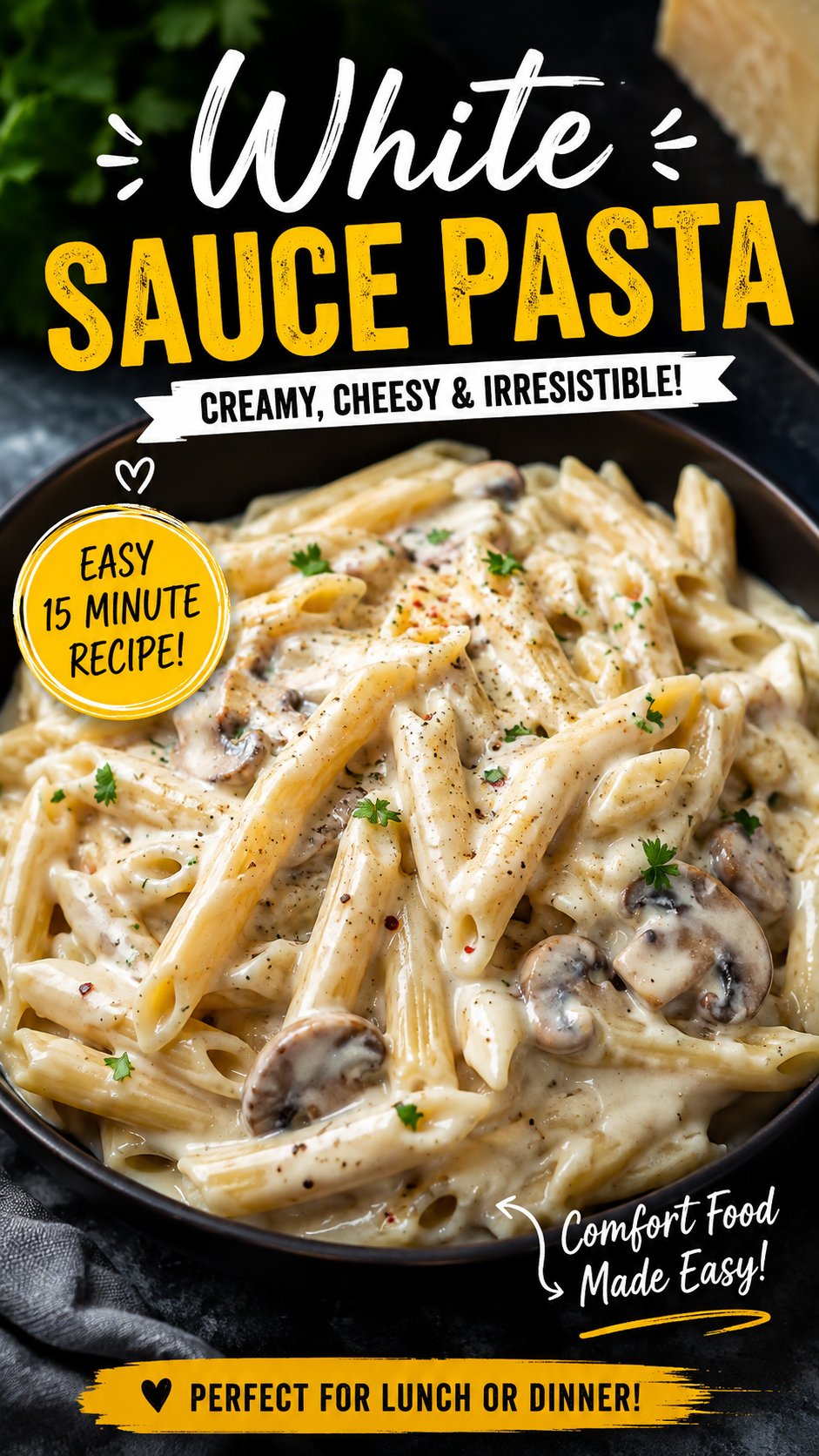
I avoided making white sauce for years because it seemed like something that could go wrong easily.
Turns out it’s one of the most forgiving sauces in the kitchen, and this version comes together in the same amount of time it takes to boil your pasta.
Creamy, simple, and endlessly adaptable. This is the recipe that finally made white sauce feel approachable.
Why This Recipe Works
A basic roux, just butter and flour cooked together, is the foundation of this sauce, and it’s genuinely one of the simplest techniques in cooking once you’ve done it a couple of times.
Adding the milk gradually, instead of all at once, is what keeps the sauce smooth instead of lumpy. 🥛
A generous handful of parmesan at the end thickens the sauce slightly and adds that salty, savory depth that keeps it from tasting flat or one-note.
What You’ll Need
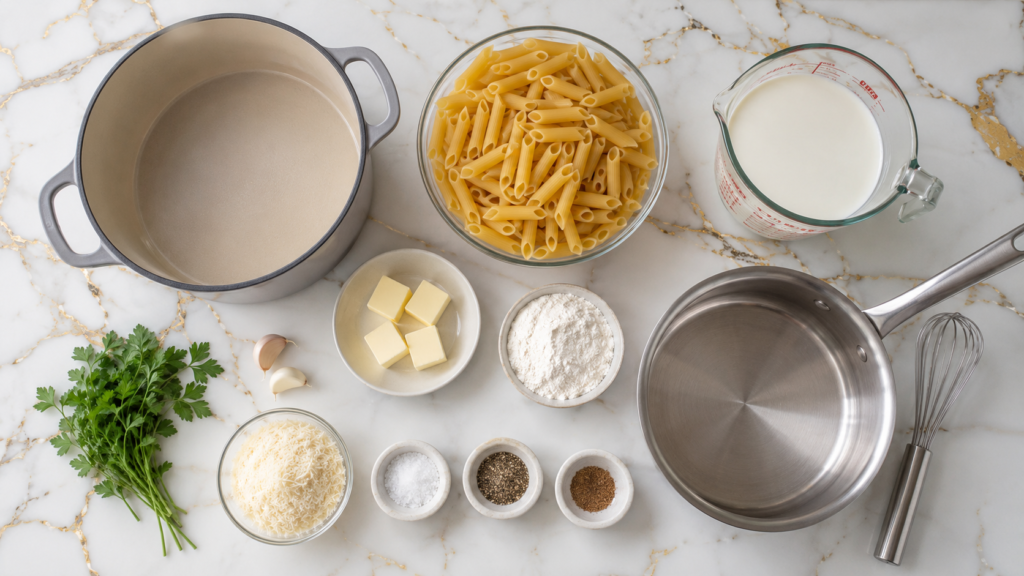
| Ingredient | Amount |
|---|---|
| Penne or fusilli pasta | 1 lb |
| Unsalted butter | 4 tbsp |
| All-purpose flour | 4 tbsp |
| Whole milk, warmed | 3 cups |
| Garlic, minced | 2 cloves |
| Grated parmesan cheese | 1/2 cup |
| Salt | 1/2 tsp, plus more to taste |
| Black pepper | 1/4 tsp |
| Ground nutmeg | 1/8 tsp |
| Fresh parsley, chopped | for topping |
Warming the milk slightly before adding it helps the sauce come together more smoothly and quickly.
Tools You’ll Need
- Large pot, for the pasta
- Medium saucepan
- Whisk
- Wooden spoon
- Measuring cups and spoons
Pro Tips
1. Cook the flour and butter together for a full minute before adding milk. This removes the raw flour taste and is a step worth not rushing, even though it’s brief.
2. Add the milk slowly, whisking constantly. Pouring it all in at once is the most common cause of lumpy sauce.
3. Warm your milk before adding it. Cold milk added to a hot roux can seize slightly, while warm milk incorporates much more smoothly.
4. Keep the heat at medium, not high. High heat can scorch the sauce on the bottom of the pan before it has a chance to thicken properly.
5. Add the cheese off direct heat, or at the very end on low. This keeps it from clumping and helps it melt evenly into the sauce.
Substitutions and Variations
- Gluten-free: Use a 1:1 gluten-free flour blend for the roux.
- Add protein: Stir in shredded rotisserie chicken or sautéed shrimp for a heartier dinner.
- Extra vegetables: Add steamed broccoli, peas, or sautéed mushrooms right before serving.
- Herb-forward version: Add a teaspoon of dried Italian seasoning or fresh basil to the finished sauce.
- Spicier version: Add a pinch of red pepper flakes for a subtle kick.
- Dairy-free: Use a plant-based butter and milk alternative, though the texture will be slightly different.
Make Ahead Tips
The sauce can be made up to 2 days ahead and stored in the fridge. Reheat gently over low heat, whisking in a splash of milk to loosen it back up.
I’d recommend cooking the pasta fresh each time you serve it, since it holds up better than sitting pre-cooked in the sauce.
How to Make It
- Bring a large pot of salted water to a boil and cook the pasta according to package instructions. Drain and set aside.
- Meanwhile, melt the butter in a medium saucepan over medium heat.
- Whisk in the flour and cook for 1 minute, stirring constantly, until lightly golden.
- Add the garlic and cook for 30 seconds, until fragrant.
- Slowly pour in the warmed milk, whisking constantly to prevent lumps.
- Continue whisking and simmering for 5 to 7 minutes, until the sauce thickens enough to coat the back of a spoon.
- Stir in the parmesan cheese, salt, pepper, and nutmeg until smooth.
- Add the drained pasta to the sauce, tossing to coat evenly.
- Taste and adjust seasoning as needed.
- Top with fresh parsley before serving.
Nutrition and Diet Notes
Here’s roughly what you’re working with per serving (recipe serves 6):
- Calories: about 350
- Protein: about 12g
- Fat: about 13g
For a lighter version, use 2% milk instead of whole milk, though the sauce will be slightly less rich.
What to Serve It With
- A simple green salad with a light vinaigrette
- Garlic bread for soaking up extra sauce
- Steamed vegetables on the side for a heartier meal
Leftovers and Storage
Store leftovers in an airtight container in the fridge for up to 3 days.
Reheat gently on the stovetop over low heat with a splash of milk to loosen the sauce, since it thickens considerably once chilled.
This dish doesn’t freeze particularly well since the white sauce can separate once thawed.
FAQ
Why is my sauce lumpy?
This usually happens if the milk was added too quickly, or wasn’t whisked in gradually. Slow, steady whisking is the key to a smooth sauce.
Can I make this sauce ahead of time?
Yes, store it in the fridge for up to 2 days and reheat gently, whisking in a little extra milk to bring back the right consistency.
Is this the same as alfredo sauce?
Not quite. This is a classic white sauce, or béchamel, built from a butter and flour base with milk, while alfredo typically relies more heavily on cream and butter without the flour thickening step.
Can I use a different pasta shape?
Yes, any short pasta shape works well here, since the sauce clings nicely to ridges and curves.
Can I double this recipe?
Yes, just use a larger saucepan for the sauce and whisk a little longer to make sure it thickens evenly at the larger volume.
Wrapping Up
This recipe proved that white sauce doesn’t deserve the intimidating reputation it sometimes gets.
It’s simple, quick, and endlessly adaptable depending on what you have in the fridge or what you’re in the mood for.
If you make this, come back and tell me what add-ins you tried, or if you kept it classic and simple. 🧀
I’d love to hear how yours turned out.