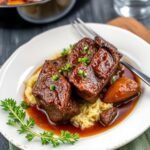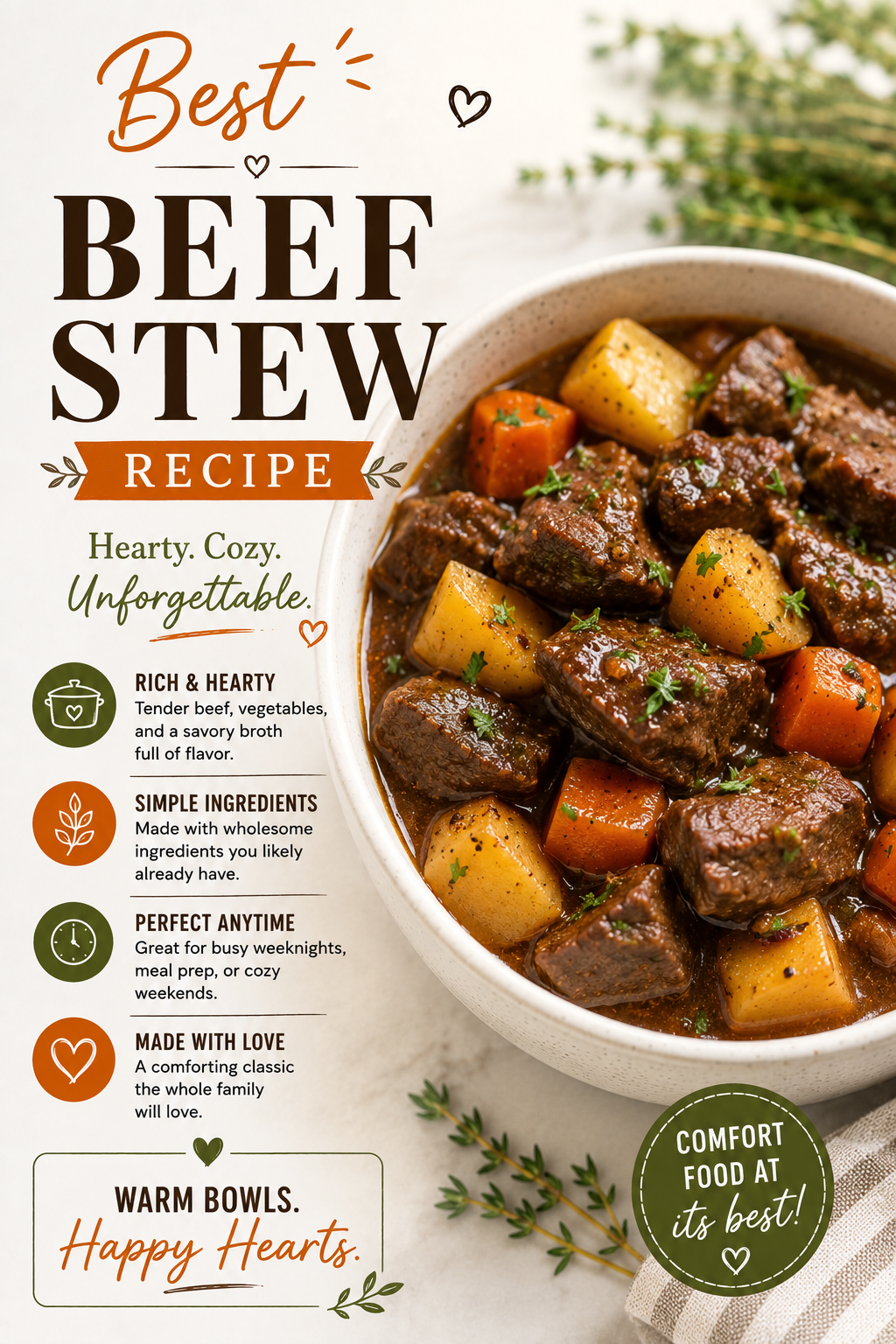
Some dishes don’t need reinventing, they just need to be made properly. This is that kind of beef stew. Deeply browned meat, a splash of red wine, and hours of slow braising in the oven turn a handful of humble ingredients into something rich enough to serve on its own with just a hunk of bread.
This isn’t a shortcut recipe, but it isn’t complicated either. Most of the time is hands-off, spent waiting while the oven does the real work. What you get in return is a stew with layers of flavor that a quick simmer on the stovetop just can’t match.
What You’ll Need
For the beef:
- 2 ½ pounds beef chuck roast, cut into 1.5-inch cubes
- 3 tablespoons all-purpose flour
- 1 teaspoon salt
- 1/2 teaspoon black pepper
- 3 tablespoons olive oil, divided
For the stew:
- 1 medium yellow onion, diced
- 3 cloves garlic, minced
- 2 tablespoons tomato paste
- 1 cup dry red wine
- 4 cups beef broth
- 4 medium carrots, cut into 1-inch pieces
- 3 medium Yukon gold potatoes, cut into 1-inch cubes
- 2 celery stalks, sliced
- 2 bay leaves
- 1 teaspoon dried thyme
- 1 sprig fresh rosemary (or 1/2 teaspoon dried)
- 1 cup frozen peas (optional, added at the end)
Ingredient Notes
Chuck roast: This cut has the fat and connective tissue needed to turn tender over a long braise. Leaner cuts like sirloin will dry out and turn tough instead.
Red wine: Choose something you’d actually drink, like a Cabernet Sauvignon or Merlot. Cooking wines labeled specifically for cooking often contain added salt and lower quality flavor.
Tomato paste: A small amount adds richness and depth without making the stew taste tomato-forward.
Fresh rosemary: If using fresh, add the whole sprig and remove it before serving, since the woody stem isn’t pleasant to eat.
Tools You’ll Need
- Large Dutch oven with lid (5 to 7 quart)
- Cutting board
- Sharp knife
- Measuring cups and spoons
- Tongs
- Wooden spoon
Why This Recipe Works
Browning the beef in batches, rather than all at once, keeps the pan hot enough for a proper sear. Overcrowding the pot drops the temperature and causes the meat to steam instead of brown, which skips an important layer of flavor.
Deglazing the pot with red wine after browning lifts up the flavorful browned bits stuck to the bottom, which would otherwise be left behind. That liquid becomes the backbone of the broth.
Cooking low and slow in the oven, rather than on the stovetop, provides even heat from all sides. This steady, gentle heat is what allows the tough connective tissue in the chuck roast to fully break down into tender, silky meat.
Pro Tips
- Brown the beef in batches. Crowding the pot leads to steaming instead of searing, which skips a key layer of flavor.
- Let the seared beef sit undisturbed. Resist the urge to move it around too soon. A proper crust takes a few minutes of contact with the hot pan.
- Scrape up the browned bits after deglazing. Those bits, called fond, carry a lot of concentrated flavor that dissolves into the wine and broth.
- Add peas at the very end. They only need a few minutes to warm through and can turn mushy and dull if added earlier.
- Let the stew rest for a few minutes before serving. This gives the broth a chance to settle and thicken slightly, making it easier to serve.
Substitutions
| Original Ingredient | Substitute | Flavor Impact |
|---|---|---|
| Red wine | Additional beef broth plus 1 tablespoon balsamic vinegar | Less depth, still flavorful |
| Chuck roast | Beef short ribs, boneless | Richer, slightly fattier |
| Yukon gold potatoes | Russet potatoes | Slightly softer texture |
| Fresh rosemary | Dried rosemary (half the amount) | Milder herbal flavor |
| Celery | Parsnips | Adds subtle sweetness |
| Tomato paste | Ketchup, small amount | Sweeter, less complex |
Variations
- Guinness beef stew: Replace the red wine with a dark stout for a malty, slightly bitter depth.
- Mushroom beef stew: Add 8 ounces of quartered cremini mushrooms along with the vegetables.
- Root vegetable stew: Add cubed turnips or parsnips for extra heartiness.
- Herb-forward stew: Finish with fresh chopped parsley and a squeeze of lemon juice for brightness.
- Spicy beef stew: Add a pinch of crushed red pepper flakes or a diced chili for heat.
Make Ahead Tips
This stew tends to taste even better the next day, once the flavors have had time to meld. It can be made up to 2 days in advance and reheated gently before serving. Vegetables and beef can also be prepped and stored separately in the refrigerator up to a day ahead if you want to save time on cooking day.
Step by Step Instructions
1. Preheat the oven. Preheat to 325°F.
2. Season and coat the beef. Toss the beef cubes with flour, salt, and pepper until evenly coated.
3. Brown the beef. Heat 2 tablespoons of olive oil in the Dutch oven over medium-high heat. Brown the beef in batches, about 3 minutes per side, without fully cooking through. Set the browned beef aside.
4. Cook the aromatics. Add the remaining tablespoon of oil to the pot. Add the onion and cook for 3 to 4 minutes, until softened. Add the garlic and tomato paste, stirring for 1 minute.
5. Deglaze with wine. Pour in the red wine, scraping up the browned bits from the bottom of the pot. Let it simmer for 2 to 3 minutes to cook off some of the alcohol.
6. Combine and braise. Return the beef to the pot. Add the beef broth, carrots, potatoes, celery, bay leaves, thyme, and rosemary. Bring to a simmer on the stovetop, then cover and transfer to the oven.
7. Cook low and slow. Braise in the oven for 2.5 to 3 hours, until the beef is fork-tender.
8. Finish and serve. Remove the bay leaves and rosemary sprig. Stir in the frozen peas if using and let sit for 5 minutes before serving.
Common Mistakes
Mistake: Beef turns out tough. This means the stew hasn’t cooked long enough. Chuck roast needs time to break down. If it’s still tough, return it to the oven rather than serving it early.
Mistake: Stew tastes thin or watery. This can happen if the flour coating on the beef was too light, or if too much liquid was added. A cornstarch slurry stirred in near the end can help thicken it if needed.
Mistake: Vegetables turn to mush. Cutting vegetables too small, or braising at too high a temperature, causes this. Stick to 1-inch pieces and keep the oven at 325°F rather than higher.
Mistake: Stew tastes flat. Taste before serving and adjust with additional salt, a splash of red wine vinegar for brightness, or extra pepper as needed.
Serving Suggestions
This stew is hearty enough to be a full meal on its own, though a few sides round it out nicely.
Side dishes:
- Crusty bread or dinner rolls
- Simple green salad with vinaigrette
- Buttery mashed potatoes for an extra hearty meal
Drinks:
- The same red wine used in the stew
- Warm apple cider
- Sparkling water with lemon
Dessert:
- Warm apple crisp
- Simple shortbread cookies
Storage
Cool leftovers to room temperature, then store in an airtight container in the refrigerator for up to 4 days.
Freezing
This stew freezes well. Cool completely, then store in freezer-safe containers or bags for up to 3 months. Potatoes may soften slightly after freezing and thawing, though the overall dish still holds up well.
Reheating
Reheat on the stovetop over medium-low heat, stirring occasionally, until warmed through. Add a splash of broth if the stew has thickened too much in the fridge. Microwaving in 1-minute intervals, stirred between each, also works.
Nutrition (Estimated, Per Serving)
Based on 6 servings:
- Calories: 410
- Protein: 34g
- Carbohydrates: 26g
- Fat: 16g
- Sodium: 690mg
These numbers are estimates and will vary based on exact ingredients and brands used.
Frequently Asked Questions
Do I need a Dutch oven for this recipe? A Dutch oven works best because it can go from stovetop to oven and holds heat evenly. A heavy oven-safe pot with a tight lid can work as a substitute.
Can I make this on the stovetop instead of in the oven? Yes. Simmer covered on low heat for about the same amount of time, checking occasionally to make sure it isn’t sticking or boiling too hard.
Does the alcohol cook out of the wine? Most of the alcohol cooks off during the simmering and braising process, though a small trace amount can remain. If you’d prefer to avoid wine entirely, use the broth and vinegar substitution listed above.
Can I use a slow cooker instead? Yes, though you’ll lose some of the browning benefits unless you sear the beef in a skillet first. Transfer everything to a slow cooker and cook on low for 8 hours.
How do I know when the beef is done? It should be tender enough to shred easily with a fork. If it still feels tough, it needs more time rather than less.
Wrapping Up
This is the kind of stew that fills the house with a good smell for hours before dinner even starts. Give it a try on a weekend when you have time to let the oven do its work.
If you make it, I’d love to hear how it turned out and if you tried any of the variations. Drop a comment below, and feel free to ask if anything about the recipe isn’t clear.