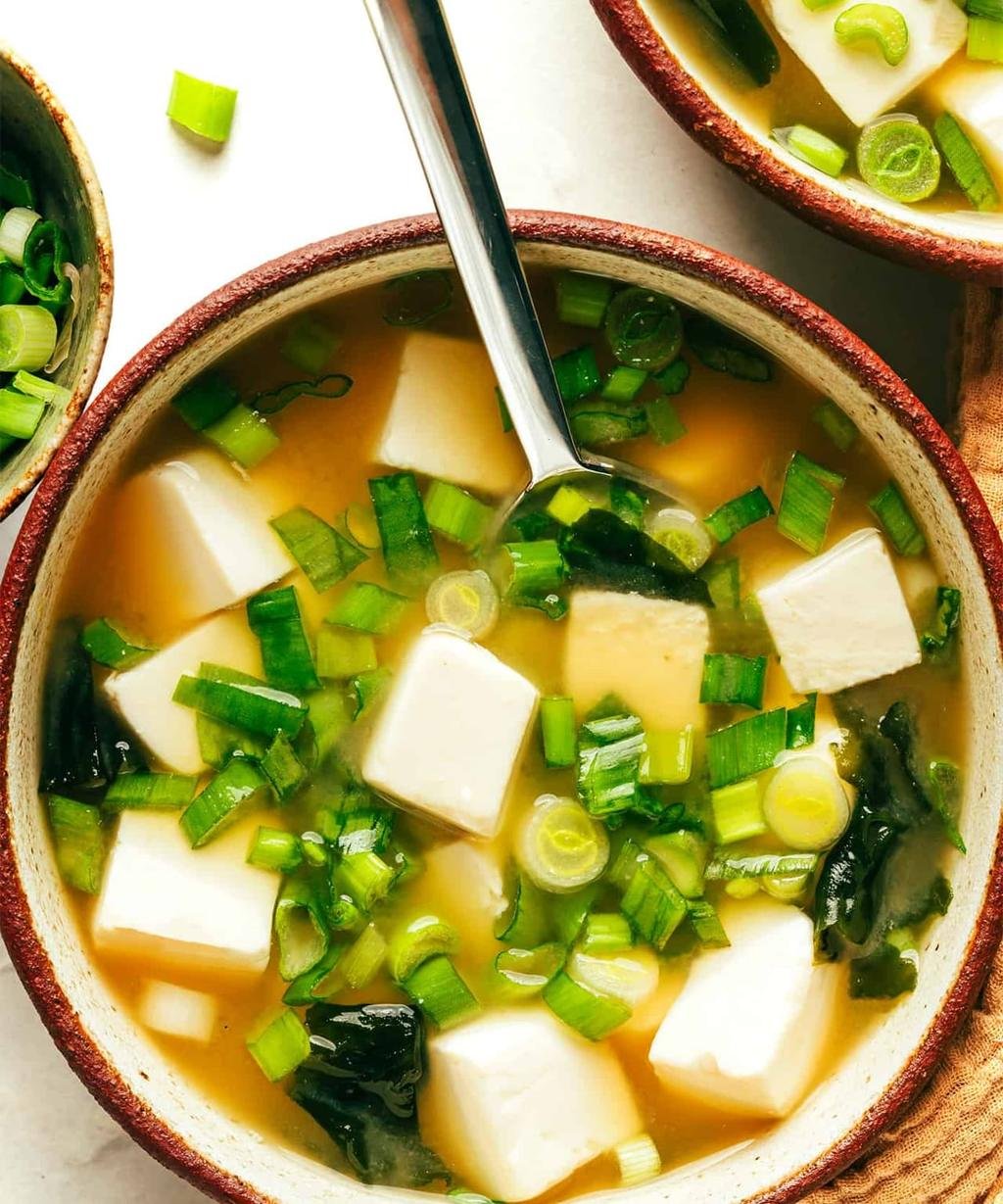
I always assumed miso soup was something you could only get at a restaurant, until I realized how simple it actually is to make. 🍵
Warm, savory broth with soft tofu, seaweed, and green onions. It’s light but somehow still really comforting.
This version comes together in about 15 minutes with ingredients that are easier to find than you might think.
Once you make your own batch, you’ll want to keep miso paste stocked in your fridge permanently.
Why This Recipe Works
Using dashi as the base gives this soup that deep, savory flavor that plain water or broth just can’t replicate.
Whisking the miso paste into a bit of warm broth before adding it to the pot helps it dissolve smoothly without clumping.
And keeping the heat gentle once the miso is added preserves its delicate flavor and beneficial properties.
What You’ll Need
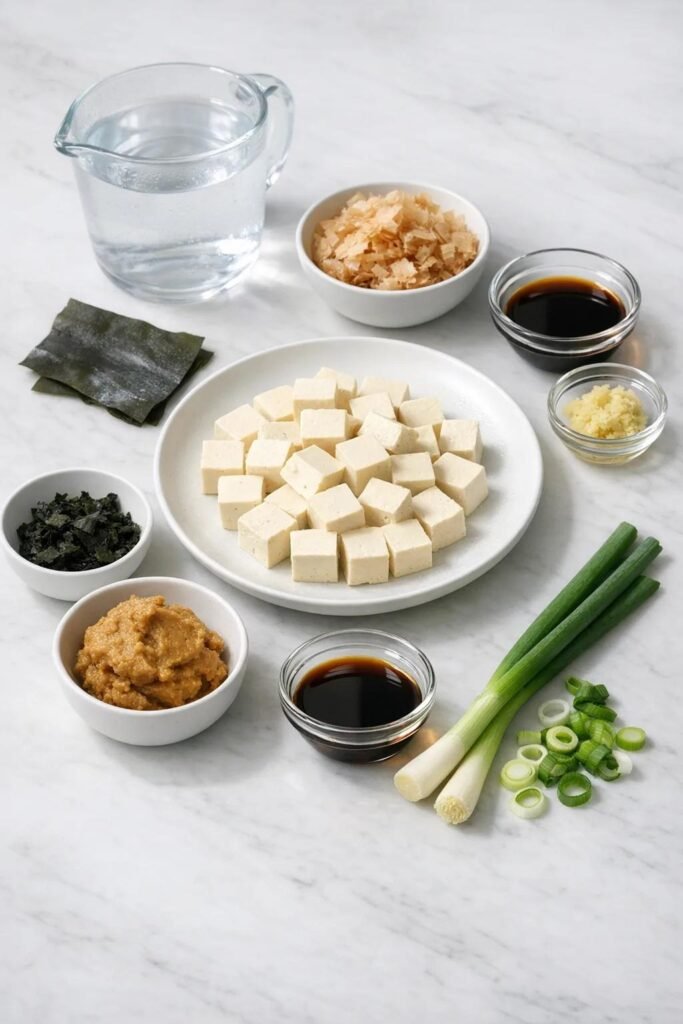
| Ingredient | Amount |
|---|---|
| Dashi stock, or water with dashi powder | 4 cups |
| White or yellow miso paste | 3 tbsp |
| Soft or silken tofu, cubed | 1 cup |
| Dried wakame seaweed | 2 tbsp |
| Green onions, sliced | 2 |
A short list, but each ingredient plays a real role in the final flavor.
Tools You’ll Need
- Medium pot
- Small bowl for dissolving miso
- Whisk or fork
- Ladle
Pro Tips
Things that make a real difference for good miso soup.
- Never let the soup boil once the miso is added. High heat can dull its flavor and break down beneficial enzymes.
- Dissolve the miso in a bit of warm broth first. Adding the paste directly to the pot often leaves lumps.
- Add the tofu gently. Soft tofu can break apart easily, so stir carefully once it’s in the pot.
- Rehydrate the wakame separately if it’s very dry. A quick soak in warm water for a few minutes softens it before adding to the soup.
- Taste before adding more miso. Different brands vary quite a bit in saltiness and intensity.
Substitutions and Variations
| Original | Swap | Notes |
|---|---|---|
| Dashi stock | Vegetable broth | Different flavor, but works as a substitute |
| White miso | Red miso | Stronger, saltier flavor |
| Silken tofu | Firm tofu | Slightly different texture, still works |
| Dried wakame | Fresh spinach | Different flavor, still adds greens |
| Regular version | Add sliced mushrooms | Adds extra texture and umami |
Want more heartiness? Add cooked noodles or extra vegetables to make this a fuller meal.
Make Ahead Tips
The dashi broth can be made a few days ahead and stored in the fridge, ready to use whenever you want soup.
Miso paste itself keeps for months in the fridge, so it’s worth having on hand for quick soups.
This soup is best made fresh once the miso is added, since it doesn’t reheat or store particularly well after that point.
How to Make Miso Soup
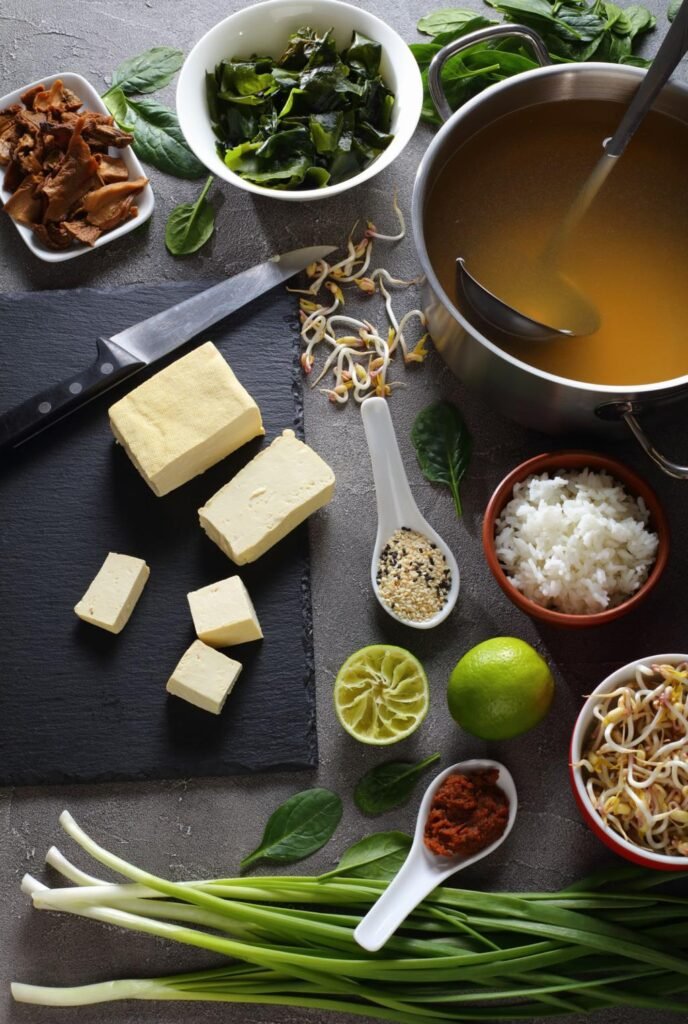
- Heat the dashi stock in a medium pot over medium heat until warm, but not boiling.
- Add the dried wakame seaweed and let it rehydrate for a few minutes.
- Add the cubed tofu and warm through gently.
- Ladle a small amount of the warm broth into a bowl and whisk in the miso paste until smooth.
- Pour the dissolved miso back into the pot, stirring gently to combine.
- Warm through without letting the soup come to a boil.
- Ladle into bowls and garnish with sliced green onions.
Simple, warm, and ready in just a few minutes.
Extra Details
A serving of miso soup comes in around 60 calories, depending on how much tofu and miso you use.
This works well as a starter before a meal or as a light snack on its own.
To save time, keep dashi powder and miso paste on hand so you can make this whenever the craving hits.
Leftovers and Storage
Store leftover soup in an airtight container in the fridge for up to 2 days.
Reheat gently on the stovetop over low heat, being careful not to let it boil, since high heat can dull the miso flavor.
This soup doesn’t freeze well due to the tofu, so it’s best enjoyed fresh within a couple days.
FAQ
What is dashi and where can I find it? Dashi is a Japanese soup stock made from kombu and bonito flakes, and it’s available as a powder or liquid concentrate at most Asian grocery stores.
Can I make this soup vegetarian? Yes, use a kombu based vegetarian dashi instead of the traditional bonito version.
Why shouldn’t miso soup boil? Boiling can break down some of the beneficial enzymes in miso paste and can also make the flavor taste less delicate.
Can I make miso soup ahead of time? The broth base can be made ahead, but it’s best to add the miso paste fresh right before serving.
What’s the difference between white and red miso? White miso is milder and slightly sweeter, while red miso is saltier and more intensely flavored.
Wrapping Up
This miso soup proves that a genuinely comforting, restaurant style soup can come together in just a few simple steps.
Once you get the hang of dissolving the miso properly, this becomes an easy addition to almost any meal.
Give this one a try and let me know in the comments what add ins you like best. I always love hearing how people customize their bowl.