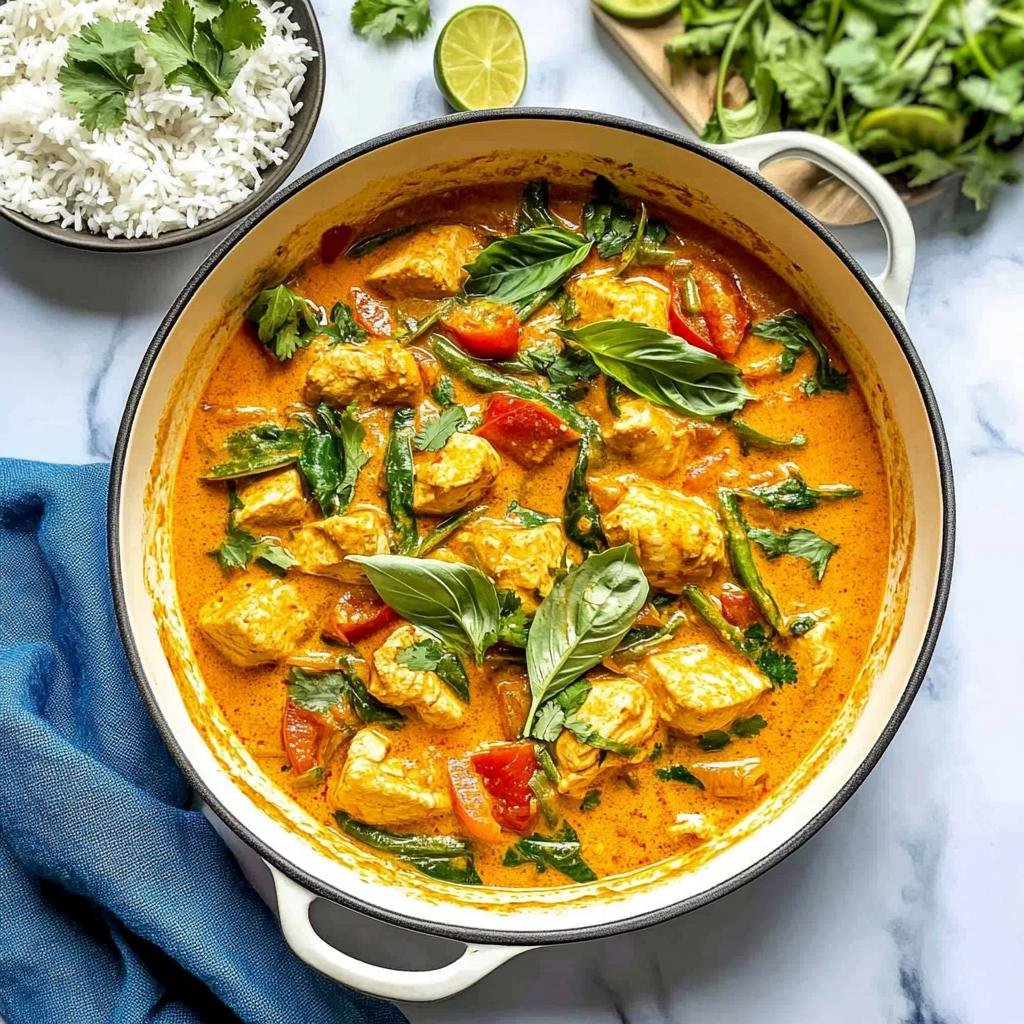
The first time I tried a coconut based curry with that sizzling mustard seed tempering, I realized curry could taste completely different depending on how you build it. 🥥
This version leans into that South Indian style, coconut milk, curry leaves, and a quick tempering of mustard and cumin seeds right at the start.
It’s rich, fragrant, and has a completely different personality than a standard curry powder based curry.
Once you try this method, you’ll want to keep curry leaves stocked in your kitchen at all times.
Why This Recipe Works
Tempering the mustard seeds and curry leaves in hot oil at the very start releases their aromatic oils, which is what gives this curry its distinct flavor.
Using coconut milk as the base, instead of broth, creates a naturally rich and slightly sweet sauce that balances the warm spices.
And simmering the chicken directly in the sauce lets it soak up all that coconut and spice flavor as it cooks.
What You’ll Need
| Ingredient | Amount |
|---|---|
| Boneless, skinless chicken thighs, cut into pieces | 1.5 lbs |
| Coconut oil or vegetable oil | 2 tbsp |
| Mustard seeds | 1 tsp |
| Cumin seeds | 1 tsp |
| Fresh curry leaves | 10-12 |
| Yellow onion, diced | 1 |
| Garlic, minced | 3 cloves |
| Fresh ginger, minced | 1 tbsp |
| Ground turmeric | 1/2 tsp |
| Ground coriander | 1 tsp |
| Red chili powder | 1/2 tsp |
| Diced tomatoes | 1 cup |
| Coconut milk | 1 can (14 oz) |
| Salt | To taste |
| Fresh cilantro | For garnish |
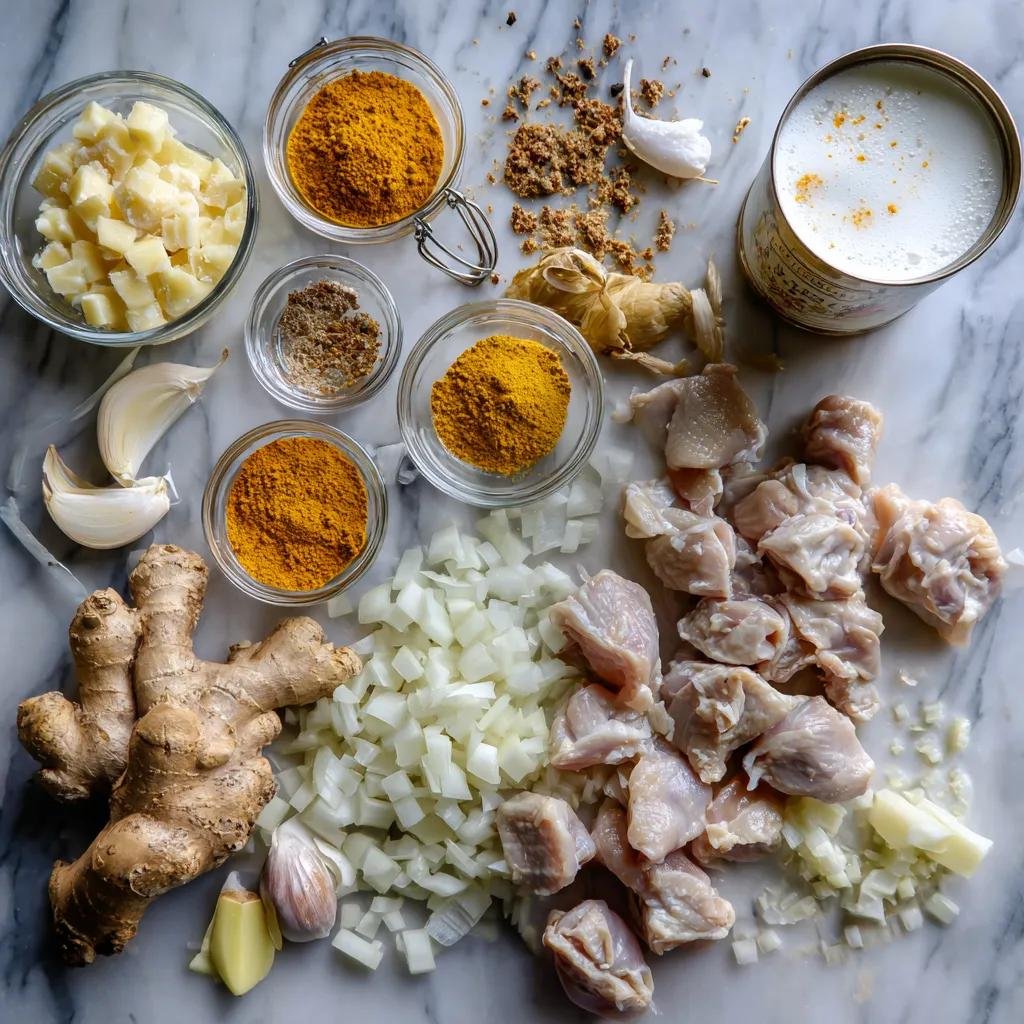
Fragrant, layered ingredients that build a genuinely different curry flavor.
Tools You’ll Need
- Large pot or deep skillet
- Wooden spoon
- Sharp knife and cutting board
- Measuring spoons
Pro Tips
Things that will make this curry taste authentic and well balanced.
- Don’t skip the tempering step. Letting the mustard seeds pop and curry leaves crisp in hot oil is what builds the real base flavor.
- Use fresh curry leaves if you can find them. Dried ones work in a pinch, but fresh leaves have a much stronger aroma.
- Cook the onions until truly soft, not just translucent. This builds a deeper base for the curry.
- Use full fat coconut milk. Light coconut milk works, but full fat gives a much richer, silkier sauce.
- Taste and adjust the salt at the end. Coconut milk mellows out spices, so it often needs a bit more seasoning than expected.
Substitutions and Variations
| Original | Swap | Notes |
|---|---|---|
| Chicken thighs | Chicken breast | Leaner, slightly less rich |
| Fresh curry leaves | Dried curry leaves | Use about double the amount |
| Coconut milk | Light coconut milk | Lighter sauce, less rich |
| Red chili powder | Cayenne pepper | Similar heat level |
| Regular version | Add spinach near the end | Adds color and extra nutrition |
Want more heat? Add a slit green chili along with the onions.
Make Ahead Tips
This curry tastes even better the next day once the flavors have had time to settle.
Store it in the fridge and reheat gently on the stovetop, adding a splash of water or broth if it’s thickened too much.
It also freezes well for up to 3 months, making it a great option for batch cooking.
How to Make Coconut Chicken Curry
- Heat the oil in a large pot over medium heat.
- Add the mustard seeds and let them pop for about 30 seconds.
- Add the cumin seeds and curry leaves, cooking for another 30 seconds until fragrant.
- Add the onion and cook for 6-8 minutes, until soft and lightly golden.
- Add the garlic and ginger, cooking for 1 minute.
- Stir in the turmeric, coriander, and chili powder, cooking for 1 minute to toast the spices.
- Add the diced tomatoes and cook for 3-4 minutes, until slightly broken down.
- Add the chicken pieces, stirring to coat in the spice mixture.
- Pour in the coconut milk and bring to a simmer.
- Cook uncovered for 20-25 minutes, stirring occasionally, until the chicken is tender and the sauce has thickened.
- Season with salt to taste and garnish with fresh cilantro.
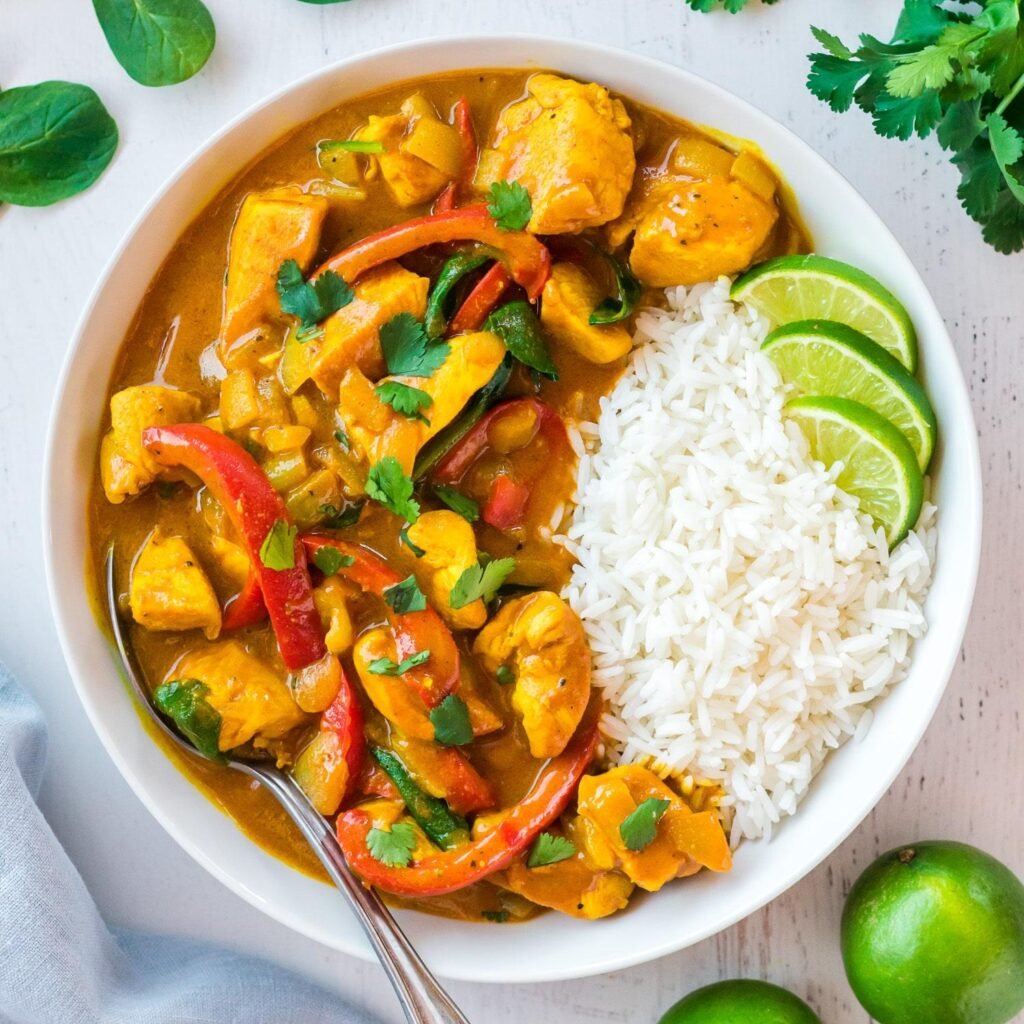
Serve hot over steamed rice.
Extra Details
A serving of coconut chicken curry with sauce comes in around 440 calories, not including rice, depending on portion size.
This pairs really well with steamed basmati rice, warm naan, or a simple cucumber salad.
To save time on a busy night, dice your onion and measure out spices ahead of time.
Leftovers and Storage
Store leftovers in an airtight container in the fridge for up to 4 days.
Reheat gently on the stovetop over low heat, adding a splash of water or coconut milk if the sauce has thickened too much.
This curry also freezes well, just thaw overnight in the fridge before reheating.
FAQ
What makes this different from a regular chicken curry? This version uses a South Indian style tempering method with mustard seeds and curry leaves, which gives it a distinctly different aroma and flavor than a curry powder based curry.
Can I use chicken breast instead of thighs? Yes, just watch the simmer time since breast can dry out faster than thighs.
What if I can’t find curry leaves? The curry will still taste good without them, though you’ll miss that distinct aromatic quality they add.
Is this curry very spicy? It has a mild to moderate warmth, though you can adjust the chili powder to your preference.
Can I make this dairy free? Yes, this recipe is already dairy free since it relies on coconut milk instead of cream.
Wrapping Up
This coconut chicken curry shows just how much a simple tempering step can change the entire character of a dish.
Once you try that sizzling mustard seed and curry leaf start, you’ll notice the difference in every single bite.
Give this one a try and let me know in the comments how spicy you made yours. I always love hearing what sides people pair it with.