
Chicken thighs were the cut that finally made me stop stressing about dry chicken. 🍗
They’re naturally more forgiving than breast meat, and once you get that skin crispy, they honestly taste like something way more special than a basic weeknight dinner.
This method gives you crispy, golden skin on the outside and juicy meat all the way through, every single time.
Once you master this basic technique, you’ll have a go to recipe for busy nights and special dinners alike.
Why This Recipe Works
Starting the thighs skin side down in a cold pan renders the fat slowly, which is exactly what gives you that deeply crispy skin.
Chicken thighs have more natural fat than breasts, which makes them much harder to overcook and dry out.
And finishing in the oven after searing lets the inside cook through gently while the skin stays crispy.
What You’ll Need
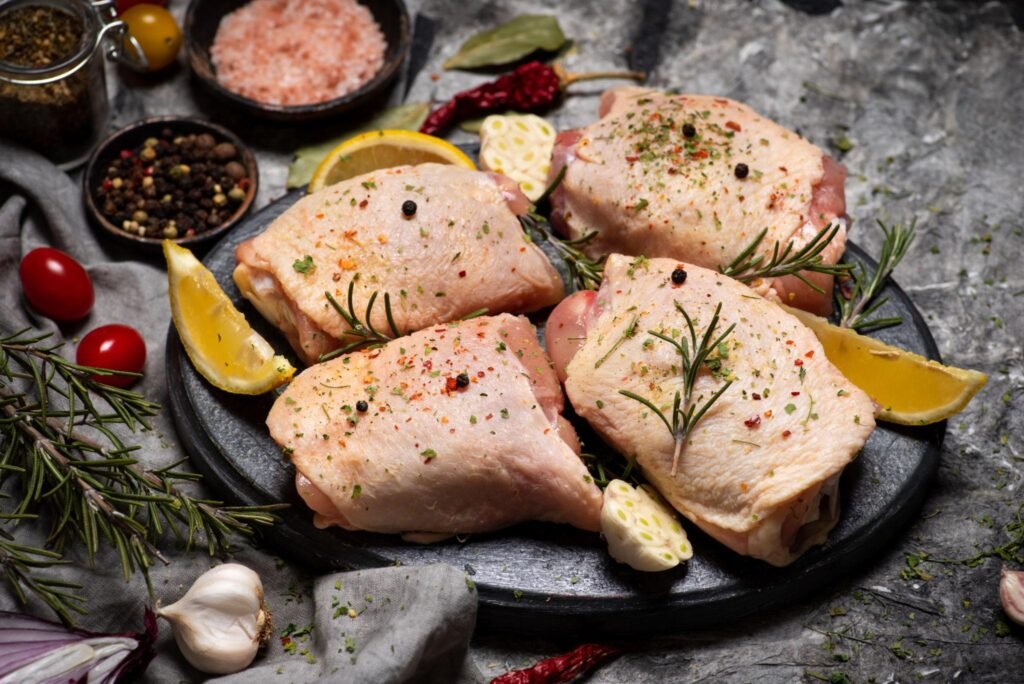
| Ingredient | Amount |
|---|---|
| Bone in, skin on chicken thighs | 6 pieces |
| Salt | 1 tsp, plus more to taste |
| Black pepper | 1/2 tsp |
| Garlic powder | 1/2 tsp |
| Paprika | 1/2 tsp |
| Olive oil | 1 tbsp |
A short list, but the technique is really what makes this recipe.
Tools You’ll Need
- Oven safe skillet, cast iron works great
- Tongs
- Meat thermometer
- Paper towels
Pro Tips
Things that genuinely make the difference for crispy, juicy chicken thighs.
- Pat the skin completely dry before seasoning. Any extra moisture works against getting that crispy skin.
- Start skin side down in a cold or barely warm pan. This slowly renders the fat instead of burning the skin before it crisps.
- Don’t move the thighs while the skin renders. Let them sit undisturbed until the skin naturally releases from the pan.
- Use a meat thermometer instead of guessing. Pull them at 175°F, since dark meat benefits from cooking a bit past the minimum safe temperature.
- Let the chicken rest for 5 minutes after cooking. This keeps the juices locked in instead of running out.
Substitutions and Variations
| Original | Swap | Notes |
|---|---|---|
| Bone in, skin on | Boneless, skinless thighs | Shorter cook time, no crispy skin step needed |
| Garlic powder and paprika | Lemon pepper seasoning | Different flavor direction |
| Oven finishing | Fully stovetop, covered | Works but skin won’t be quite as crispy |
| Regular seasoning | Add fresh rosemary and thyme | Adds an herby, aromatic flavor |
| Olive oil | Avocado oil | Higher smoke point for searing |
Want a sauce to go with it? Deglaze the pan after removing the chicken with a splash of broth and a squeeze of lemon.
Make Ahead Tips
You can season the chicken thighs up to a day ahead and store them uncovered in the fridge, which actually helps the skin dry out even more.
Cooked chicken thighs keep well and reheat nicely, making this a great base for meal prep.
They also freeze well, either raw and seasoned or fully cooked, for up to 3 months.
How to Make Chicken Thighs
- Preheat your oven to 425°F.
- Pat the chicken thighs completely dry with paper towels.
- Season generously with salt, pepper, garlic powder, and paprika on both sides.
- Heat the olive oil in an oven safe skillet over medium heat.
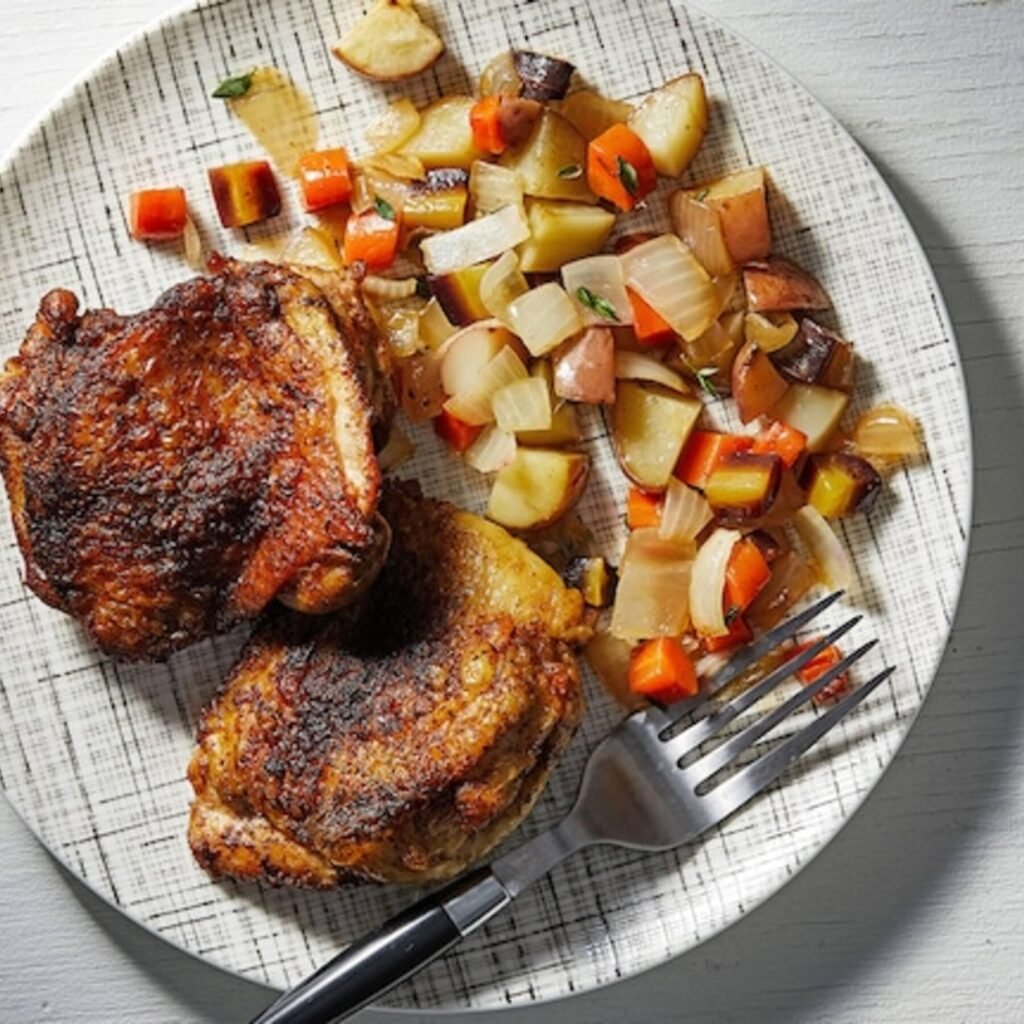
- Place the thighs skin side down in the pan and let them cook undisturbed for 6-8 minutes, until the skin is deeply golden and crispy.
- Flip the thighs and cook for another 2 minutes.
- Transfer the skillet to the oven and bake for 15-18 minutes, until the internal temperature reaches 175°F.
- Remove from the oven and let rest for 5 minutes before serving.
That slow render at the start is really the whole secret here.
Extra Details
A single chicken thigh, cooked this way, comes in around 250 calories, depending on size.
This works as a base for grain bowls, salads, or simply served alongside rice and vegetables.
To save time during the week, cook a large batch and use it across several meals throughout the week.
Leftovers and Storage
Store cooked chicken thighs in an airtight container in the fridge for up to 4 days.
Reheat gently in a skillet or oven to help maintain some crispiness in the skin, rather than using the microwave.
These also freeze well, either whole or shredded, for up to 3 months.
FAQ
Why are chicken thighs more forgiving than breasts? They have more natural fat, which means they stay juicy over a wider range of cooking times and temperatures.
What temperature should chicken thighs be cooked to? The safe minimum is 165°F, but pulling them at 175°F often gives you a more tender, juicy result with dark meat.
Can I skip the searing step and just bake them? You can, but the initial sear is really what gives you that crispy skin, so it’s worth the extra few minutes.
Can I use boneless thighs for this method? Yes, just reduce the cook time since boneless pieces cook faster than bone in cuts.
How long do cooked chicken thighs last in the fridge? They keep well for up to 4 days when stored properly in an airtight container.
Wrapping Up
This chicken thigh method is the kind of recipe worth keeping in your back pocket for busy nights and special dinners alike.
Once you get that slow render and crispy skin down, you’ll have a reliably juicy, flavorful base for so many different meals.
Give this one a try this week and let me know in the comments what you served it with. I always love hearing how people build meals around it.