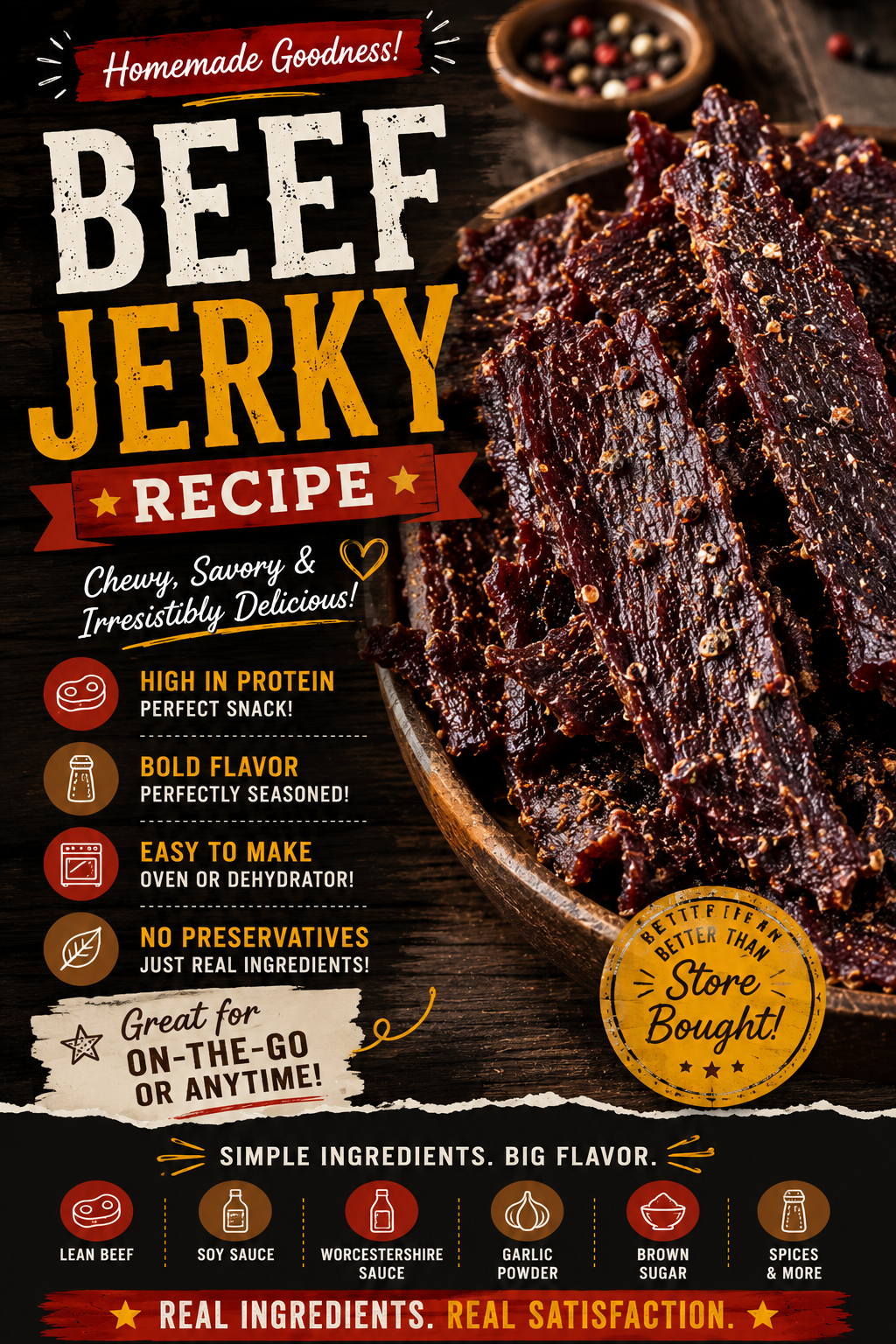
I used to grab a bag of jerky at the gas station without thinking twice about the price.
Then I actually looked at what I was paying per ounce, and decided to figure out how to make it myself.
Turns out homemade jerky tastes better, costs a fraction as much, and the process is a lot simpler than I expected.
Why This Recipe Works
Slicing the beef against the grain and freezing it slightly first makes it much easier to get thin, even slices, which is the biggest factor in how your jerky turns out.
Marinating for a full day gives the flavors real time to soak into the meat instead of just sitting on the surface. 🥩
Drying the jerky low and slow, whether in the oven or a dehydrator, removes moisture gradually so you end up with that signature chewy texture instead of something tough or brittle.
What You’ll Need
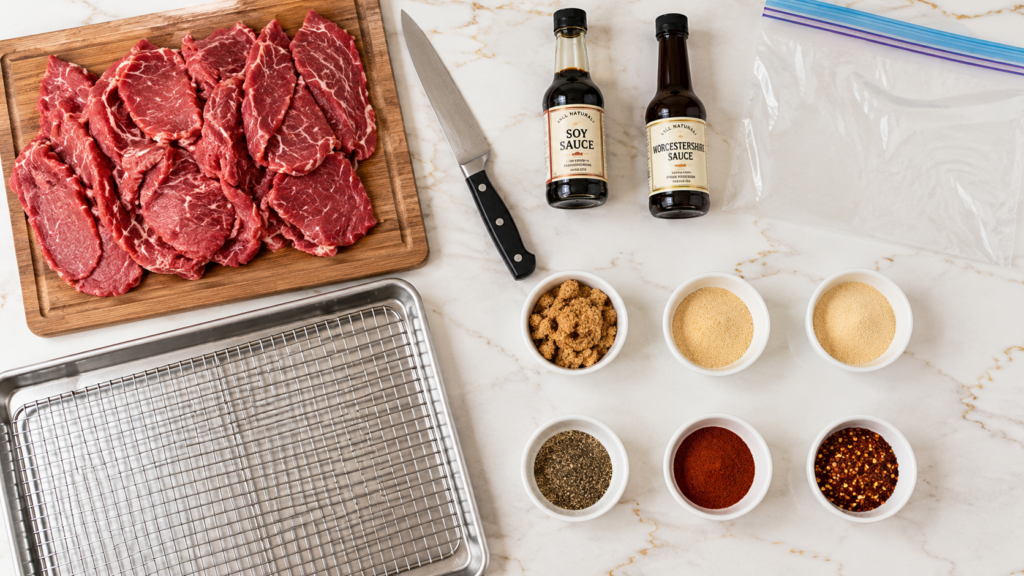
| Ingredient | Amount |
|---|---|
| Beef eye of round or flank steak | 2 lbs |
| Soy sauce | 1/2 cup |
| Worcestershire sauce | 1/4 cup |
| Brown sugar | 2 tbsp |
| Garlic powder | 1 tsp |
| Onion powder | 1 tsp |
| Black pepper | 1 tsp |
| Smoked paprika | 1/2 tsp |
| Red pepper flakes (optional) | 1/4 tsp |
Eye of round is a great choice here because it’s naturally lean, which is exactly what you want for jerky since fat doesn’t dry well and can spoil faster.
Tools You’ll Need
- Sharp knife or meat slicer
- Large resealable bag or shallow dish
- Wire racks
- Baking sheets (to catch drips)
- Food dehydrator (optional, oven works too)
- Paper towels
Pro Tips
1. Partially freeze the beef for about an hour before slicing. This firms it up significantly and makes it much easier to get thin, even slices.
2. Slice against the grain for a more tender bite, or with the grain for a chewier texture. Both are valid, it really comes down to personal preference.
3. Marinate for a full 24 hours if you can. A shorter marinade works in a pinch, but a full day gives you much more developed flavor throughout the meat.
4. Pat the beef dry before laying it out to dry. Excess marinade left on the surface extends drying time and can leave you with a less even texture.
5. Check for doneness by bending a piece, not just looking at it. Properly dried jerky should bend and crack slightly without breaking completely or feeling soft and pliable.
Substitutions and Variations
- Spicier version: Add extra red pepper flakes, or a few dashes of hot sauce to the marinade.
- Sweeter version: Increase the brown sugar slightly, or add a tablespoon of honey to the marinade.
- Teriyaki style: Add 2 tablespoons of pineapple juice and a touch more brown sugar for a sweeter, teriyaki-inspired flavor.
- Different protein: Turkey breast can be used in place of beef, though the marinade time and drying time may need slight adjustments.
- Gluten-free: Use a gluten-free soy sauce or tamari in place of regular soy sauce.
- Low sodium: Use a reduced-sodium soy sauce and cut back slightly on added salt from other seasonings.
Make Ahead Tips
The marinade itself can be mixed up to a week ahead and stored in the fridge until you’re ready to use it.
Once dried, jerky keeps well for weeks, which makes a double batch a smart move if you’re already setting up to make it.
How to Make It
- Partially freeze the beef for about 1 hour, until firm but not fully frozen.
- Slice the beef thinly, about 1/8 to 1/4 inch thick, trimming away any visible fat.
- In a bowl, whisk together the soy sauce, Worcestershire sauce, brown sugar, garlic powder, onion powder, black pepper, smoked paprika, and red pepper flakes.
- Place the sliced beef in a large resealable bag or shallow dish. Pour the marinade over the top, making sure all pieces are coated.
- Refrigerate for at least 4 hours, ideally a full 24 hours, turning occasionally.
- Remove the beef from the marinade and pat each piece dry with paper towels.
- Arrange the beef in a single layer on wire racks set over baking sheets, making sure pieces don’t overlap.
- If using an oven, set it to its lowest temperature, around 170°F, and prop the door open slightly with a wooden spoon to let moisture escape. Dry for 4 to 6 hours.
- If using a dehydrator, follow the manufacturer’s instructions, typically around 6 to 8 hours at 155°F.
- Check periodically after the minimum time, looking for a texture that bends and cracks slightly without breaking. Let cool completely before storing.
Nutrition and Diet Notes
Here’s roughly what you’re working with per serving (about 1 ounce of finished jerky):
- Calories: about 70
- Protein: about 11g
- Sodium: about 450mg
For a lower sodium version, use a reduced-sodium soy sauce and cut the added salt down further if you’re adding any beyond what’s already in the recipe.
What to Pair It With
- A cold drink for an easy on-the-go snack
- Trail mix for a homemade snack bag on hikes or road trips
- A cheese board, if you want to use it as a savory, chewy element alongside crackers and fruit
Leftovers and Storage
Store finished jerky in an airtight container or resealable bag at room temperature for up to 2 weeks.
For longer storage, keep it in the fridge for up to 1 month, or in the freezer for up to 6 months.
Always check for any excess moisture in the container before sealing, since that can lead to mold over time.
FAQ
How do I know when my jerky is fully dried?
It should bend and crack slightly without snapping cleanly in half or feeling soft and pliable. If it’s still soft, it needs more time.
Can I make this without a dehydrator?
Yes, a low oven with the door propped open works well, though it may take a little longer than a dedicated dehydrator.
Why is my jerky tough instead of chewy?
This usually means it dried for too long, or the slices were cut too thick to begin with. Thinner, even slices dry more evenly.
Is homemade jerky safe to store at room temperature?
Yes, once properly dried, jerky is shelf stable for a couple of weeks. Just make sure it’s fully dried and stored in an airtight container.
Can I use a different cut of beef?
Yes, top round or sirloin tip both work well. The key is choosing a lean cut, since fat doesn’t dry properly and can shorten shelf life.
Wrapping Up
Making jerky at home turned out to be far less complicated than I expected, and the payoff in flavor and cost makes it well worth the wait.
It’s the kind of project that takes a little planning but almost no actual effort once it’s marinating or drying.
If you make this, come back and tell me what flavor variation you tried, or how long your batch lasted before it disappeared. 🥩
I’d love to hear how yours turned out.