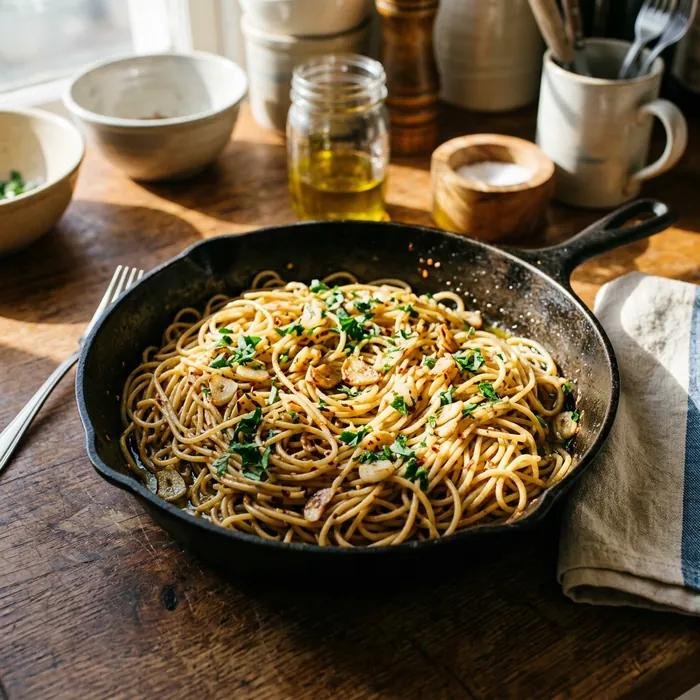
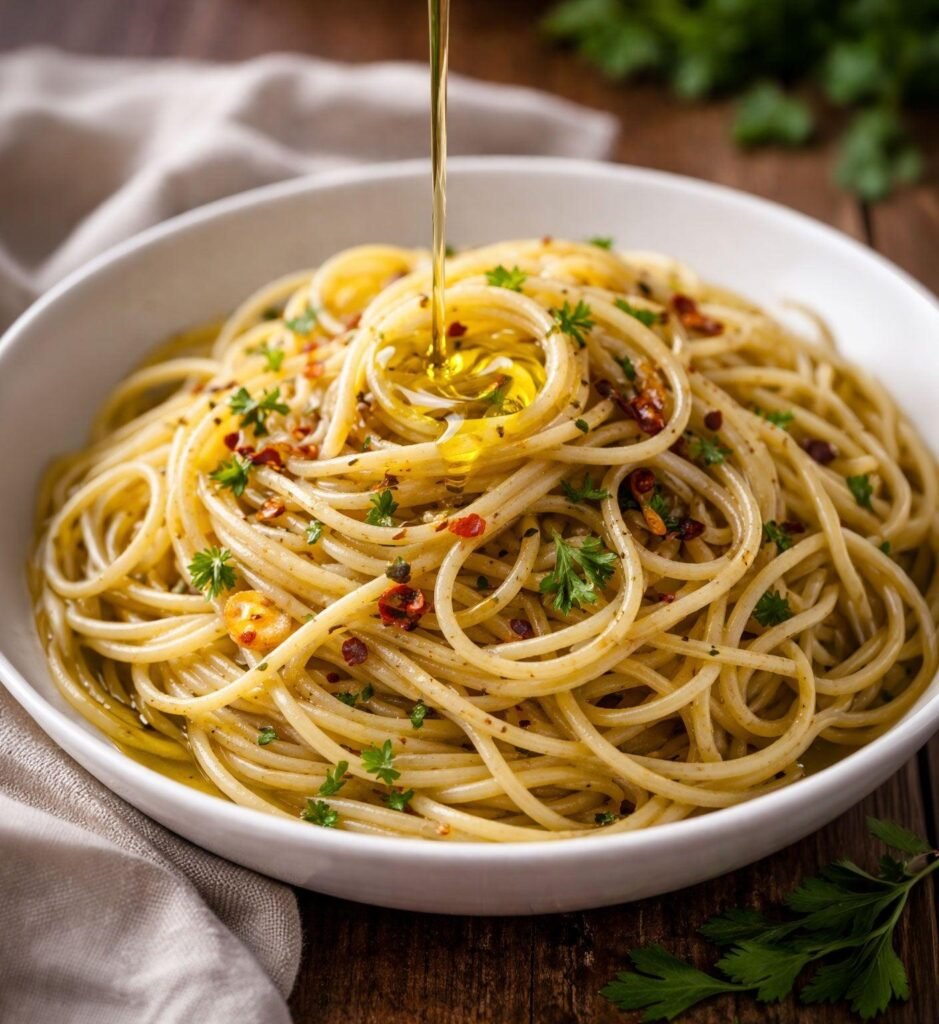
Meta Description: Make authentic Aglio e Olio pasta at home with this easy recipe. Garlic, olive oil, and chili flakes come together in a quick, flavorful dish that proves simple ingredients can be extraordinary.
The Pasta That Taught Me Less Is More
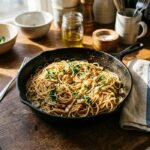
Aglio e Olio, which translates simply to “garlic and oil,” is proof that you don’t need a long ingredient list to make something genuinely delicious. I remember making this dish for the first time on a night when my fridge was nearly empty — just pasta, garlic, olive oil, and a few red chili flakes in the cupboard. It turned out to be one of the best pasta dishes I’d ever made, and it’s stayed in my regular rotation ever since.
This classic Neapolitan dish relies entirely on technique rather than a long ingredient list. The garlic needs to be cooked just right — golden, not burnt — and the pasta water plays a surprisingly important role in bringing everything together into a silky, emulsified sauce.
Why This Recipe Works
With so few ingredients, every single one matters. Good quality olive oil, fresh garlic, and properly salted pasta water make all the difference between a forgettable bowl of noodles and a dish that tastes like it came from a trattoria in Naples.
Ingredients (Serves 2)
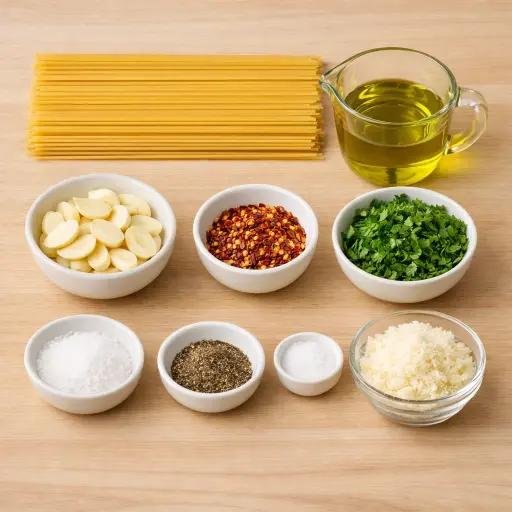
- 200g (about 7 oz) spaghetti
- 5-6 cloves garlic, thinly sliced
- 1/3 cup good quality extra virgin olive oil
- 1/2 to 1 teaspoon red chili flakes (adjust to taste)
- 1/4 cup reserved pasta water (or more, as needed)
- 2 tablespoons chopped fresh parsley
- Salt to taste
- Freshly grated Parmesan cheese (optional, though traditionalists often skip it)
- A squeeze of lemon juice (optional, for brightness)
Step-by-Step Method
Step 1: Cook the pasta. Bring a large pot of water to a rolling boil and season generously with salt — it should taste like the sea. This is the single most important step for flavoring the pasta itself, since Aglio e Olio has no heavy sauce to mask under-seasoned noodles. Cook the spaghetti until al dente, about 1 minute less than the package instructions suggest, since it will finish cooking in the pan. Before draining, reserve about a cup of the starchy pasta water.
Step 2: Slowly cook the garlic. While the pasta cooks, heat the olive oil in a large skillet over low to medium-low heat. Add the sliced garlic and cook slowly, stirring frequently, until it turns a light golden color — this usually takes 3-5 minutes. Low heat is essential here; garlic burns quickly and turns bitter, which will ruin the entire dish.
Step 3: Add the chili flakes. Once the garlic is golden, add the red chili flakes and stir for about 30 seconds to release their flavor into the oil. Remove the pan from heat briefly if it’s getting too hot, since chili flakes can also burn easily.
Step 4: Combine pasta and sauce. Add the drained (but not rinsed) spaghetti directly into the skillet with the garlic oil. Toss well, adding a splash of the reserved pasta water a little at a time. The starchy water helps emulsify the oil and coat the pasta evenly, creating a light, glossy sauce rather than just oily noodles.
Step 5: Finish and season. Remove from heat, stir in the chopped parsley, and taste for seasoning, adding more salt if needed. A squeeze of lemon juice at the end brightens the dish nicely, though it’s an optional, non-traditional touch. Serve immediately, topped with Parmesan if desired.
Tips for the Best Aglio Olio
- Slice, don’t mince, the garlic. Thin slices cook more evenly and give a pleasant texture, whereas minced garlic can burn faster and turn mushy.
- Never rush the garlic step. Low and slow is the key to sweet, golden garlic instead of bitter, burnt bits.
- Save more pasta water than you think you’ll need. It’s easier to add more than to fix a dry, clumpy pasta after the fact.
- Use good olive oil. Since it’s the primary flavor carrier in this dish, a higher quality extra virgin olive oil makes a noticeable difference.
- Toss, don’t stir. Tossing the pasta in the pan helps distribute the oil and garlic more evenly than simple stirring.
Variations to Try
Once you’ve mastered the base recipe, it’s easy to build on it:
- Add protein: Shrimp, grilled chicken, or pan-seared mushrooms all pair well.
- Add greens: Wilted spinach or arugula adds color and nutrition.
- Add anchovies: A few finely chopped anchovy fillets melted into the oil add a deep umami note without tasting fishy.
- Add breadcrumbs: Toasted breadcrumbs sprinkled on top add a nice crunch and are a traditional way to add texture without cheese.
Frequently Asked Questions
Why is my Aglio e Olio oily instead of saucy? This usually means not enough pasta water was added, or it wasn’t incorporated properly. The starch in the water is what emulsifies the oil into a cohesive sauce, so don’t skip this step.
Can I use garlic powder instead of fresh garlic? Fresh garlic is strongly recommended for this dish, since the slow-cooked, golden garlic slices are central to both the flavor and texture. Garlic powder won’t replicate the same result.
Is Parmesan cheese traditional in Aglio e Olio? Traditional Neapolitan versions typically skip cheese, relying instead on the garlic, oil, and chili for flavor. That said, many modern versions include a light sprinkle of Parmesan or Pecorino, and it’s a matter of personal preference.\]]