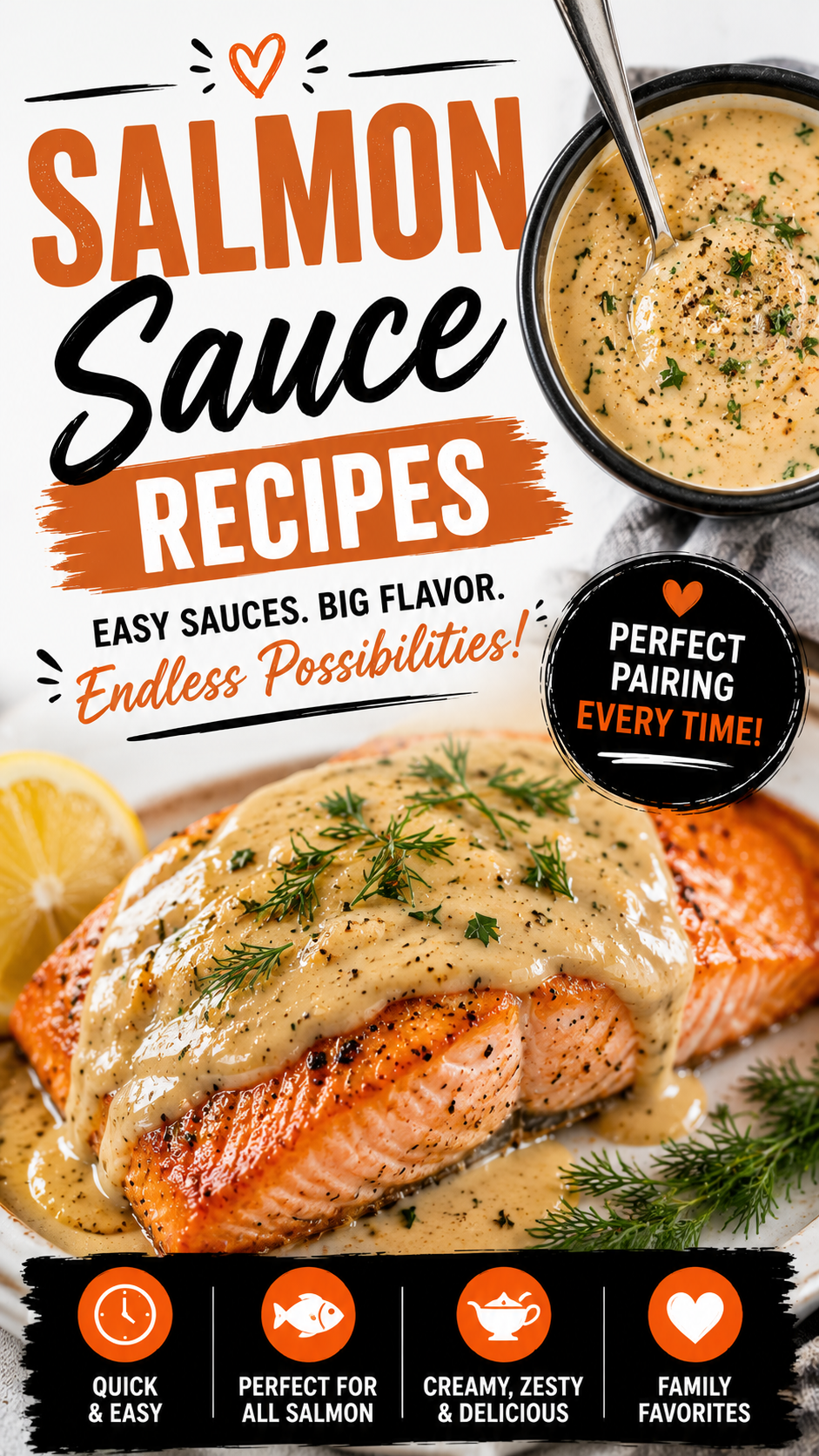
I used to think restaurant-quality salmon required some kind of special technique I didn’t have.
Turns out the real secret is just a good sear and a genuinely good sauce. This creamy garlic herb sauce takes simple baked salmon and turns it into something that feels like a real occasion.
Why This Recipe Works
Searing the salmon skin-side down first gives you that crispy, golden crust that makes the whole dish feel more special, while the inside stays tender and flaky.
Building the sauce in the same pan used for searing means you’re capturing all that leftover flavor instead of leaving it behind. 🐟
A splash of lemon juice at the end cuts through the richness of the cream, keeping the sauce from feeling too heavy against the fish.
What You’ll Need
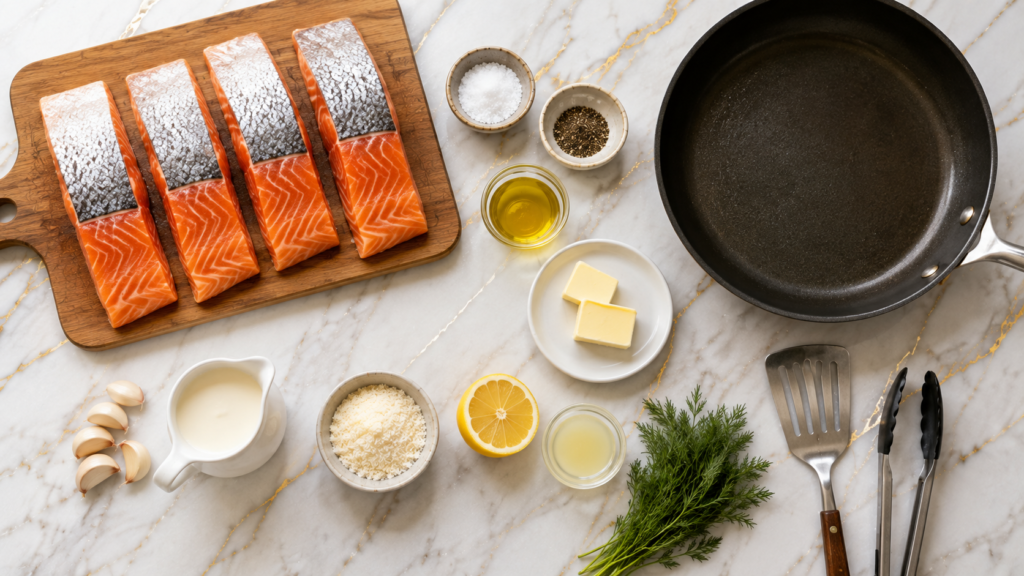
| Ingredient | Amount |
|---|---|
| Salmon fillets, skin-on | 4 (about 6 oz each) |
| Salt | 1 tsp, plus more to taste |
| Black pepper | 1/2 tsp |
| Olive oil | 2 tbsp |
| Unsalted butter | 2 tbsp |
| Garlic, minced | 4 cloves |
| Heavy cream | 3/4 cup |
| Grated parmesan cheese | 1/3 cup |
| Fresh lemon juice | 1 tbsp |
| Fresh dill, chopped | 2 tbsp, plus more for topping |
Look for fillets of similar thickness so they finish cooking at the same time.
Tools You’ll Need
- Large skillet
- Fish spatula or regular spatula
- Tongs
- Measuring cups and spoons
- Cutting board and knife
Pro Tips
1. Pat the salmon completely dry before searing. Excess moisture prevents the skin from crisping up properly and can cause the fish to stick to the pan.
2. Don’t move the salmon once it’s in the pan. Let it sear undisturbed for several minutes so the skin has time to release naturally instead of tearing.
3. Cook the salmon skin-side down for most of the cooking time. This protects the delicate flesh and gives you that crispy skin people love.
4. Build the sauce in the same pan after removing the salmon. All those browned bits left behind add real depth to the finished sauce.
5. Add the lemon juice at the very end, off heat. This keeps its bright flavor intact instead of mellowing out over continued cooking.
Substitutions and Variations
- Lighter version: Swap the heavy cream for half and half, though the sauce will be noticeably thinner.
- Different herbs: Fresh parsley or chives can replace dill for a different flavor direction.
- Spicier version: Add a pinch of red pepper flakes to the sauce for a subtle kick.
- Dairy-free: Use a plant-based cream and skip the parmesan, adding a little extra salt to balance the flavor.
- Sun-dried tomato addition: Stir in a couple tablespoons of chopped sun-dried tomatoes for a slightly different, tangier sauce.
- Different fish: This same sauce works well with other firm, mild fish like halibut or cod.
Make Ahead Tips
The sauce can be made ahead and stored in the fridge for up to 2 days, then gently reheated before serving over freshly cooked salmon.
I’d recommend cooking the salmon fresh each time, since it’s really at its best right after searing.
How to Make It
- Pat the salmon fillets dry and season both sides with salt and pepper.
- Heat the olive oil in a large skillet over medium-high heat. Place the salmon skin-side down and sear for 4 to 5 minutes, without moving it.
- Flip and cook for an additional 2 to 3 minutes, until the fish reaches an internal temperature of 145°F. Remove from the pan and set aside.
- Reduce heat to medium. Add the butter to the same skillet.
- Add the garlic and cook for 30 seconds, until fragrant.
- Pour in the heavy cream, scraping up any browned bits from the bottom of the pan.
- Simmer for 3 to 4 minutes, until slightly thickened.
- Stir in the parmesan cheese until melted and smooth.
- Remove from heat and stir in the lemon juice and dill.
- Return the salmon to the pan, spooning the sauce over the top, and serve immediately with extra dill.
Nutrition and Diet Notes
Here’s roughly what you’re working with per serving (recipe serves 4):
- Calories: about 430
- Protein: about 36g
- Fat: about 30g
For a lighter version, use half and half instead of heavy cream and reduce the parmesan slightly.
What to Serve It With
- Roasted asparagus or steamed green beans
- Garlic mashed potatoes or rice
- A simple side salad with a light vinaigrette
Leftovers and Storage
Store leftovers in an airtight container in the fridge for up to 2 days.
Reheat gently on the stovetop over low heat, or in the microwave in short bursts, since salmon can dry out or turn rubbery if overheated.
This dish doesn’t freeze particularly well since the cream sauce can separate once thawed.
FAQ
How do I know when my salmon is fully cooked?
The internal temperature should reach 145°F, and the flesh should flake easily with a fork. A meat thermometer is the most reliable way to check.
Why is my salmon skin not getting crispy?
This usually means the fish wasn’t dried thoroughly first, or it was moved too early in the pan before the skin had a chance to release naturally.
Can I use skinless salmon?
Yes, just reduce the sear time slightly, since skinless fillets tend to cook a bit faster.
Is this sauce very rich?
It’s on the richer side, similar to other cream-based sauces, but the lemon juice helps balance it out and keeps it from feeling too heavy.
Can I double this recipe?
Yes, just sear the salmon in batches if your skillet isn’t large enough to hold all the fillets without crowding.
Wrapping Up
This dish proved that restaurant-quality salmon is genuinely doable at home, without any complicated technique required.
It’s rich, flavorful, and comes together fast enough for a weeknight, while still feeling like something worth dressing up the table for.
If you make this, come back and tell me what herbs you used, or what you served it alongside. 🐟
I’d love to hear how yours turned out.