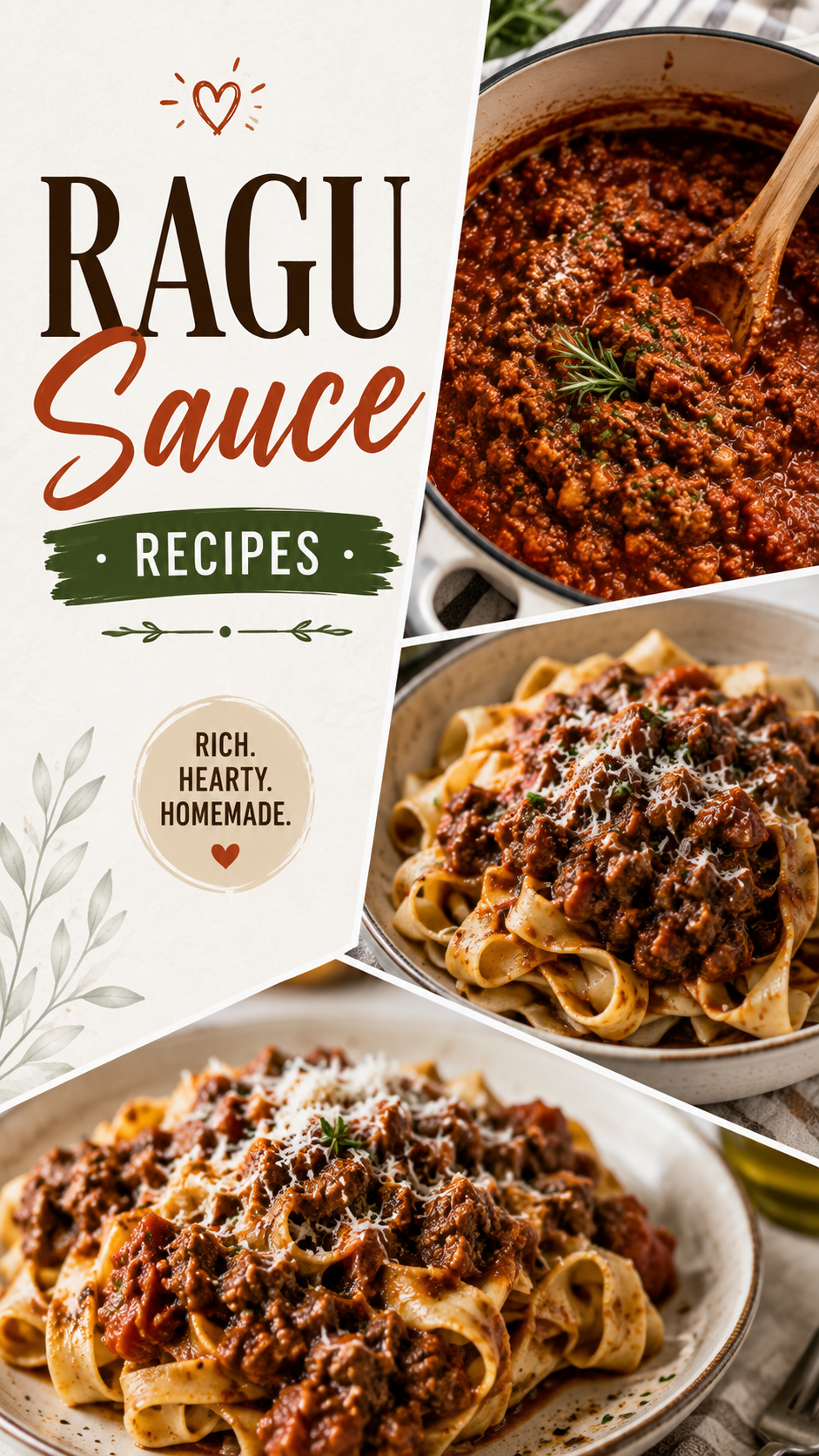
I used to think ragu was just a fancier word for regular pasta sauce.
Then I actually made one from scratch, and realized it’s a completely different thing. Deep, rich, and built slowly over hours, not something you rush together on a Tuesday.
This is the sauce worth setting aside a lazy afternoon for.
Why This Recipe Works
Browning the beef in batches, without crowding the pot, builds a deep, caramelized base that becomes the backbone of the entire sauce.
Cooking a real soffritto, that classic combination of onion, carrot, and celery, until it’s genuinely soft gives the ragu a sweetness and depth that rushed versions never quite reach. 🍷
A long, slow simmer, closer to 3 hours than 30 minutes, is what breaks the meat down until it’s tender enough to fall apart into the sauce, thickening everything into something rich and clingy.
What You’ll Need
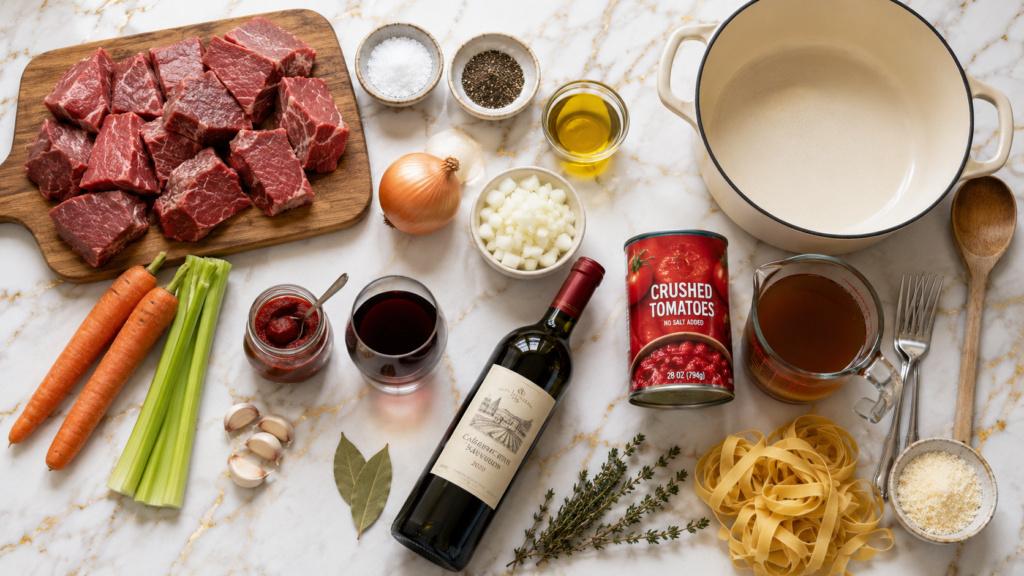
| Ingredient | Amount |
|---|---|
| Beef chuck, cut into large chunks | 2 lbs |
| Salt | 1 tsp, plus more to taste |
| Black pepper | 1/2 tsp |
| Olive oil | 3 tbsp |
| Yellow onion, diced | 1 medium |
| Carrots, diced | 2 medium |
| Celery stalks, diced | 2 |
| Garlic, minced | 4 cloves |
| Tomato paste | 3 tbsp |
| Dry red wine | 1 cup |
| Crushed tomatoes | 28 oz can |
| Beef broth | 1 cup |
| Bay leaves | 2 |
| Fresh thyme sprigs | 3 |
| Pappardelle or tagliatelle pasta | 1 lb |
| Grated parmesan cheese | for serving |
Chuck is ideal here because it has enough fat and connective tissue to break down beautifully over the long simmer.
Tools You’ll Need
- Large Dutch oven
- Tongs
- Cutting board and knife
- Wooden spoon
- Two forks, for shredding
Pro Tips
1. Pat the beef completely dry before searing. Any surface moisture steams the meat instead of browning it, and that browning is where a lot of the ragu’s depth comes from.
2. Don’t rush the soffritto. Let the onion, carrot, and celery cook until they’re genuinely soft and slightly golden, not just barely softened.
3. Let the wine reduce before adding the tomatoes. This concentrates its flavor and cooks off some of the sharper alcohol taste.
4. Check the sauce periodically as it simmers. If it looks too thick, add a splash more broth. Too thin, simmer uncovered a little longer.
5. Shred the beef directly in the sauce once it’s tender. This lets every strand soak up more flavor than pulling it out and shredding separately.
Substitutions and Variations
- Different meat: A mix of beef and pork, or ground beef in a pinch, both work well with this same method.
- No red wine: Use extra beef broth with a splash of balsamic vinegar instead.
- Slow cooker version: Sear the beef and build the soffritto on the stovetop first, then transfer everything to a slow cooker on low for 6 to 7 hours.
- Extra herby: Add a bay leaf’s worth of fresh rosemary or oregano along with the thyme.
- Lighter version: Trim more visible fat from the chuck before searing and skim excess fat from the sauce before serving.
- Gluten-free: Serve over a gluten-free pasta, the sauce itself is naturally gluten-free.
Make Ahead Tips
This ragu is genuinely better the next day, once the flavors have had more time to fully develop and meld together.
Make it up to 3 days ahead, store it covered in the fridge, and reheat gently on the stovetop before tossing with fresh pasta.
How to Make It
- Season the beef with salt and pepper.
- Heat the olive oil in a large Dutch oven over medium-high heat. Sear the beef in batches, about 3 minutes per side, until deeply browned. Remove and set aside.
- In the same pot, add the onion, carrots, and celery. Cook for 8 to 10 minutes, until soft and slightly golden.
- Add the garlic and tomato paste, cooking for 1 to 2 minutes.
- Pour in the red wine, scraping up any browned bits from the bottom of the pot. Simmer for 3 to 4 minutes to reduce slightly.
- Add the crushed tomatoes, beef broth, bay leaves, and thyme. Return the beef to the pot.
- Bring to a simmer, then reduce heat to low. Cover and cook for 2 1/2 to 3 hours, stirring occasionally, until the beef is fork-tender.
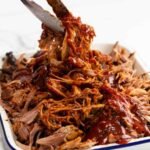
- Remove the bay leaves and thyme sprigs. Shred the beef directly in the sauce using two forks.
- Meanwhile, cook the pasta according to package instructions, drain, and toss with the ragu.
- Serve topped with grated parmesan.
Nutrition and Diet Notes
Here’s roughly what you’re working with per serving (recipe serves 6, not including pasta):
- Calories: about 380
- Protein: about 30g
- Fat: about 20g
For a lighter version, trim more fat from the beef before searing and skim any excess from the sauce before serving.
What to Serve It With
- Crusty bread for soaking up extra sauce
- A simple green salad with a light vinaigrette
- A glass of the same red wine you used in the sauce
Leftovers and Storage
Store leftover ragu in an airtight container in the fridge for up to 4 days, separate from the pasta if possible.
Reheat gently on the stovetop over low heat, adding a splash of broth if it’s thickened too much.
This sauce freezes exceptionally well. Store in a freezer-safe container for up to 3 months, and thaw overnight in the fridge before reheating.
FAQ
Can I make this in a slow cooker instead of the stovetop?
Yes, sear the beef and build the soffritto on the stovetop first, then transfer everything to a slow cooker on low for 6 to 7 hours.
Why is my ragu too thin?
This usually means it needs more time simmering uncovered to reduce and thicken properly. Give it extra time if the sauce still looks watery.
Can I use ground beef instead of chuck?
Yes, in a pinch, though you’ll lose some of that deep, shredded texture that chunks of chuck provide after a long simmer.
Is this the same as bolognese?
They’re related but not identical. Bolognese traditionally includes milk or cream and often uses ground meat, while this style of ragu relies on larger pieces of meat that shred apart over a long braise.
Can I double this recipe?
Yes, it scales up well. Just use a larger pot and give the sauce a little extra time to come back to a simmer after adding everything.
Wrapping Up
This ragu taught me that some sauces really are worth the extra hours, and I don’t think I can go back to a quick 20-minute jar-based version after making this one.
It takes patience, but almost none of that time requires standing over the stove, which makes it a lot more doable than it sounds.
If you make this, come back and tell me what pasta shape you served it over, or how long your ragu simmered. 🍝
I’d love to hear how yours turned out.