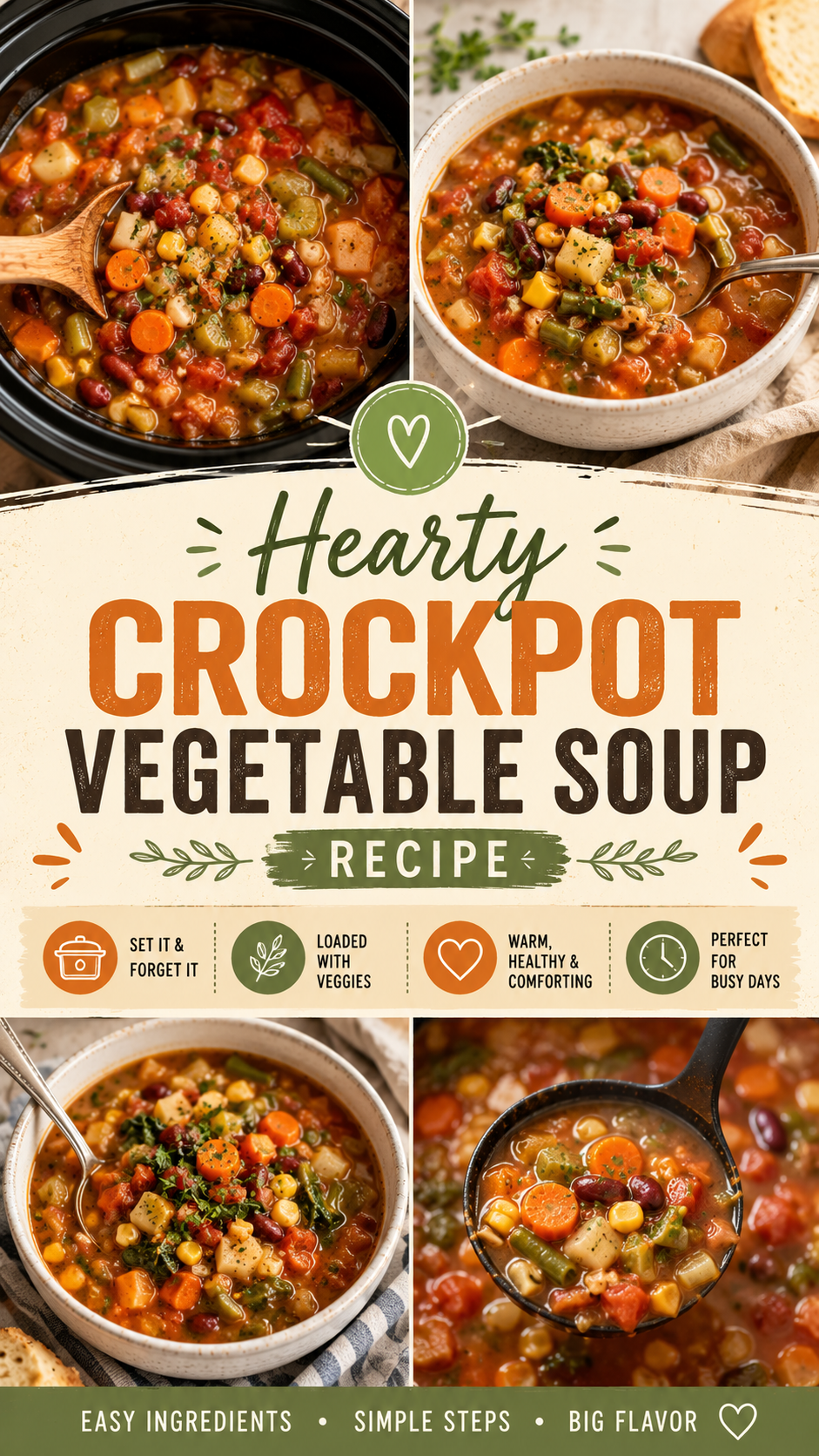
Not every good soup needs meat to feel satisfying. This one leans entirely on vegetables and a well-built broth, and it still manages to taste rich and filling enough to be dinner on its own. It’s the kind of soup that works whether you’re trying to eat lighter, use up produce sitting in the fridge, or just want something warm without much effort.
The slow cooker gives every vegetable time to soften and release its flavor slowly into the broth, which is part of why this tastes far better than a quick 20-minute stovetop version.
What You’ll Need
For the soup:
- 2 tablespoons olive oil
- 1 medium yellow onion, diced
- 3 cloves garlic, minced
- 3 medium carrots, sliced
- 2 celery stalks, sliced
- 2 medium potatoes, cubed
- 1 (14.5-ounce) can diced tomatoes
- 6 cups vegetable broth
- 1 cup green beans, trimmed and cut into pieces
- 1 cup corn kernels, fresh or frozen
- 1 cup frozen peas
- 1 teaspoon dried basil
- 1 teaspoon dried oregano
- 1 bay leaf
- Salt and black pepper, to taste
Ingredient Notes
Vegetable broth: Look for a broth with a short ingredient list. Some brands lean heavily sweet or salty, which can throw off the overall balance of the soup.
Diced tomatoes: Canned tomatoes add acidity and body to the broth. Fire-roasted diced tomatoes work well here too, if you want a slightly smokier note.
Potatoes: Yukon gold or red potatoes hold their shape better than russets, which can start to break down and thicken the broth more than intended.
Frozen vegetables: Corn and peas both work well from frozen and don’t need thawing first, since they’ll cook through quickly once added.
Tools You’ll Need
- Slow cooker (6-quart or similar)
- Large skillet (for sautéing the onion and garlic)
- Cutting board
- Sharp knife
- Measuring cups and spoons
- Wooden spoon
- Ladle
Why This Recipe Works
Sautéing the onion and garlic before adding them to the slow cooker builds a base layer of flavor that raw aromatics alone wouldn’t provide. That small step at the start makes a noticeable difference in the finished broth.
Layering in vegetables with different cook times, potatoes and carrots early, green beans and corn later, keeps every vegetable at the right texture instead of some turning mushy while others stay firm.
The combination of diced tomatoes and vegetable broth gives the soup enough acidity and body to taste balanced and full, even without any meat or dairy in the mix.
Pro Tips
- Sauté the onion and garlic first. This quick step before slow cooking deepens the overall flavor of the broth.
- Cut vegetables into similar sizes. Even sizing means everything cooks at roughly the same rate.
- Add quick-cooking vegetables later. Corn, peas, and green beans only need the last 30 to 45 minutes to become tender.
- Taste and season near the end. Vegetable broths vary in saltiness by brand, so it’s easier to get the seasoning right once everything has had time to cook together.
- Add a splash of acid at the end if it tastes flat. A small splash of vinegar or a squeeze of lemon juice can brighten the whole pot.
Substitutions
| Original Ingredient | Substitute | Flavor Impact |
|---|---|---|
| Vegetable broth | Chicken broth | Adds more savory depth, no longer vegetarian |
| Green beans | Zucchini, sliced | Softer texture, milder flavor |
| Potatoes | Sweet potatoes | Sweeter, slightly softer |
| Diced tomatoes | Crushed tomatoes | Thicker, smoother broth |
| Dried basil | Fresh basil, added at the end | Brighter, more fragrant |
| Corn | Lima beans | Creamier texture |
Variations
- Italian-style vegetable soup: Add a Parmesan rind while cooking and stir in cooked small pasta near the end.
- Bean and vegetable soup: Add a can of drained cannellini or kidney beans for extra protein and heartiness.
- Spicy vegetable soup: Add a pinch of red pepper flakes or a diced jalapeño for heat.
- Curried vegetable soup: Stir in 1 tablespoon of curry powder along with the other seasonings for a warmer, spiced flavor.
- Extra hearty version: Add cubed butternut squash or sweet potato for more body and natural sweetness.
Make Ahead Tips
Vegetables can be chopped up to a day in advance and stored separately in the refrigerator to keep them fresh. This soup also tends to taste even better the next day, once the flavors have had time to fully develop, making it a good option to prepare ahead of time.
Step by Step Instructions
1. Sauté the aromatics. Heat the olive oil in a skillet over medium heat. Add the onion and cook for 3 to 4 minutes, until softened. Add the garlic and cook for 30 seconds more.
2. Transfer to the slow cooker. Add the sautéed onion and garlic to the slow cooker along with the carrots, celery, potatoes, diced tomatoes, and vegetable broth.
3. Season. Stir in the basil, oregano, and bay leaf. Season lightly with salt and pepper.
4. Cook low and slow. Cover and cook on low for 6 to 7 hours, or on high for 3 to 4 hours, until the vegetables are tender.
5. Add quick-cooking vegetables. During the last 30 to 45 minutes, stir in the green beans, corn, and peas.
6. Finish and serve. Remove the bay leaf. Taste and adjust the seasoning with additional salt and pepper before serving.
Common Mistakes
Mistake: Vegetables turn to mush. Adding all the vegetables at the start, rather than staggering them, is the usual cause. Add quicker-cooking vegetables later in the process.
Mistake: Soup tastes watery or thin. This can happen with certain broth brands or if too much liquid is used. Letting the soup simmer uncovered on high for the last 15 minutes can help it reduce slightly.
Mistake: Soup tastes flat. Taste before serving and adjust with salt, pepper, or a splash of vinegar or lemon juice for brightness.
Mistake: Potatoes fall apart. Russet potatoes are more prone to breaking down over a long cook time. Yukon gold or red potatoes hold their shape better.
Serving Suggestions
This soup works well as a light meal on its own or alongside something heartier.
Side dishes:
- Crusty bread or dinner rolls
- Simple green salad with vinaigrette
- Grilled cheese sandwich for dipping
Drinks:
- Warm herbal tea
- Sparkling water with lemon
- A light white wine such as Pinot Grigio
Storage
Cool leftovers to room temperature, then store in an airtight container in the refrigerator for up to 5 days.
Freezing
This soup freezes very well, since it doesn’t contain dairy or noodles that can change texture after thawing. Freeze in a freezer-safe container for up to 3 months. Thaw overnight in the refrigerator before reheating.
Reheating
Reheat on the stovetop over medium heat, stirring occasionally, until warmed through. Microwaving in 1-minute intervals, stirred between each, also works well.
Nutrition (Estimated, Per Serving)
Based on 6 servings:
- Calories: 140
- Protein: 4g
- Carbohydrates: 26g
- Fat: 4g
- Sodium: 480mg
These numbers are estimates and will vary based on exact ingredients and brands used.
Frequently Asked Questions
Is this soup vegan? Yes, as written it’s fully plant-based, as long as the vegetable broth used doesn’t contain any animal products.
Can I add protein to this soup? Yes. Cooked beans, lentils, or shredded chicken all work well stirred in near the end of cooking.
Can I use fresh tomatoes instead of canned? Yes, though canned tomatoes tend to have a more consistent flavor and texture for slow cooking. If using fresh, you may want to add a small amount of tomato paste for extra body.
How long does this soup keep in the fridge? Up to 5 days in an airtight container, and the flavor often improves after the first day.
Can I make this on the stovetop instead? Yes. After sautéing the onion and garlic, add the remaining ingredients and simmer covered for about 35 to 40 minutes, until the vegetables are tender.
Wrapping Up
This is the kind of soup that proves a meal doesn’t need meat to feel hearty and complete. Give it a try, especially on a day when you want something simple, warm, and full of vegetables.
If you make it, I’d love to hear how it turned out and if you tried any of the variations. Drop a comment below, and feel free to ask if anything about the recipe isn’t clear.