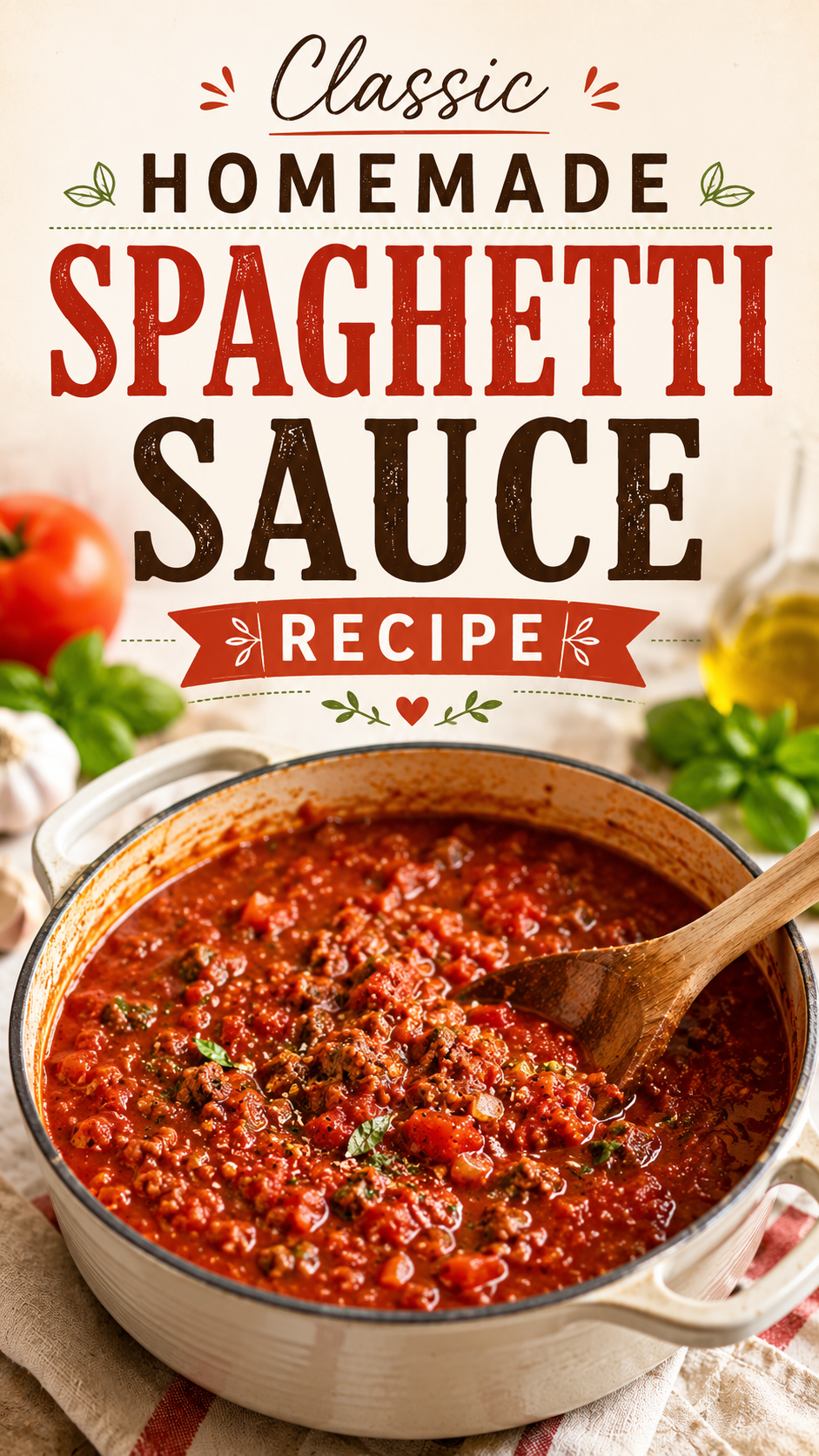
Jarred spaghetti sauce is fine in a pinch, but it doesn’t come close to what a pot of homemade sauce can do with a little time and a handful of pantry staples. This one simmers low and slow, building a deep, rich flavor that tastes like it’s been cooking all day, because in a way, it has.
It freezes beautifully too, so a single pot can turn into several easy dinners down the line.
What You’ll Need
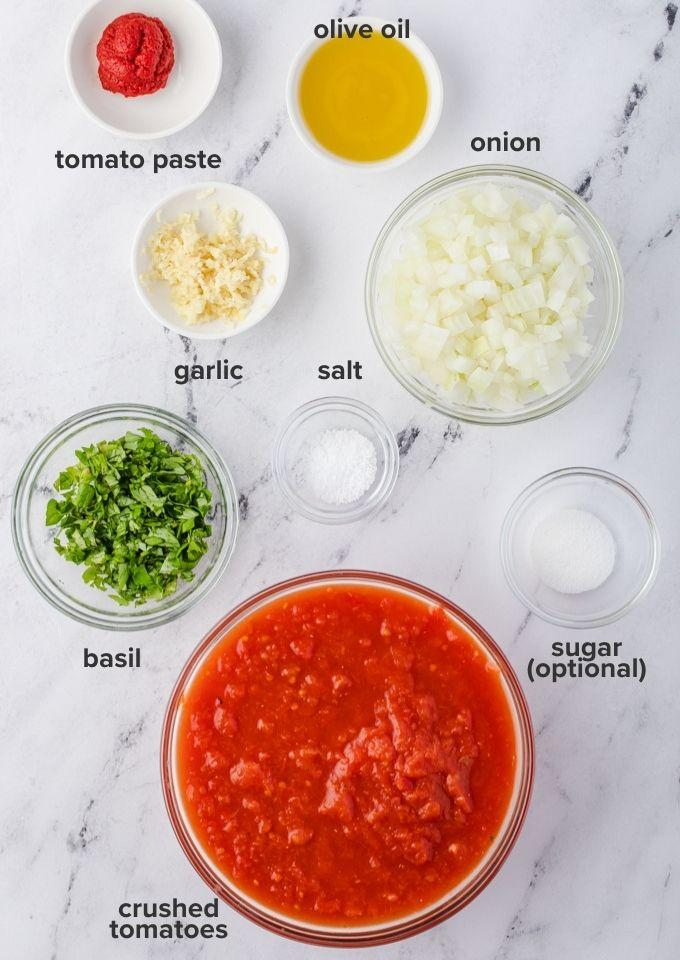
- 2 tablespoons olive oil
- 1 medium yellow onion, diced
- 4 cloves garlic, minced
- 1 pound ground beef or Italian sausage
- 1 (28-ounce) can crushed tomatoes
- 1 (15-ounce) can tomato sauce
- 2 tablespoons tomato paste
- 1 teaspoon dried basil
- 1 teaspoon dried oregano
- 1/2 teaspoon red pepper flakes (optional)
- 1 bay leaf
- 1 teaspoon sugar
- Salt and black pepper, to taste
- 1/4 cup fresh basil, chopped, for finishing
Ingredient Notes
Ground beef vs. sausage: Ground beef gives a classic, familiar flavor, while Italian sausage adds extra spice and richness. A mix of both works well too.
Crushed tomatoes: These form the main body of the sauce. Look for a good quality brand, since the tomato flavor carries the whole dish.
Sugar: A small amount balances the natural acidity of the tomatoes. It shouldn’t make the sauce taste sweet, just less sharp.
Tools You’ll Need
- Large pot or Dutch oven
- Cutting board
- Sharp knife
- Wooden spoon
- Measuring cups and spoons
Why This Recipe Works
Browning the ground beef or sausage first builds a savory base layer of flavor that raw meat simmered directly in the sauce wouldn’t develop on its own.
Simmering the sauce low and slow for at least 45 minutes gives the flavors time to meld and deepen, turning separate ingredients into a cohesive, rich sauce rather than a collection of individual flavors.
A small amount of sugar balances the natural acidity in canned tomatoes, which is a classic technique that keeps the sauce tasting rounded instead of sharp or tinny.
Pro Tips
- Brown the meat well before adding liquid. This builds a deeper base flavor than adding raw meat directly to the sauce.
- Simmer low and slow. At least 45 minutes, though longer only improves the flavor further.
- Add fresh basil at the end. Cooking it for a long time mutes its flavor, so stir it in during the last few minutes instead.
- Taste and adjust seasoning throughout. Tomato products vary in acidity and saltiness by brand, so taste as you go.
- Skim excess fat if needed. If using a fattier meat, a spoon can skim off excess grease that rises to the surface.
Substitutions
| Original Ingredient | Substitute | Flavor Impact |
|---|---|---|
| Ground beef | Ground turkey | Leaner, milder flavor |
| Italian sausage | Plant-based sausage | Similar spice, vegetarian option |
| Crushed tomatoes | Diced tomatoes, blended | Similar result with an extra step |
| Dried basil | Fresh basil (triple the amount) | Brighter flavor |
| Sugar | Grated carrot | Natural sweetness, added texture |
Variations
- Meatball spaghetti sauce: Simmer homemade or store-bought meatballs directly in the sauce for the last 20 minutes of cooking.
- Spicy arrabbiata-style sauce: Increase the red pepper flakes for a spicier, bolder sauce.
- Vegetable-loaded sauce: Add diced bell peppers, mushrooms, or zucchini along with the onion.
- Red wine sauce: Add 1/2 cup of red wine after browning the meat, letting it reduce before adding the tomatoes.
- Vegetarian sauce: Skip the meat entirely and add extra vegetables or a can of drained lentils for texture.
Make Ahead Tips
This sauce tastes even better the next day, once the flavors have had more time to meld. It can be made up to 3 days in advance and stored in the refrigerator, or frozen for longer storage.
Step by Step Instructions
1. Sauté the onion. Heat the olive oil in a large pot over medium heat. Add the onion and cook for 3 to 4 minutes, until softened.
2. Add garlic and meat. Add the garlic and cook for 30 seconds. Add the ground beef or sausage, breaking it apart as it browns, about 6 to 8 minutes.
3. Add the tomatoes. Stir in the crushed tomatoes, tomato sauce, and tomato paste.
4. Season. Add the basil, oregano, red pepper flakes if using, bay leaf, sugar, salt, and pepper.
5. Simmer. Bring to a low simmer, then reduce heat and cook uncovered for 45 minutes to an hour, stirring occasionally.
6. Finish and serve. Remove the bay leaf, stir in the fresh basil, and taste to adjust seasoning before serving over pasta.
Common Mistakes
Mistake: Sauce tastes acidic or sharp. This usually means it needs a touch more sugar, or a longer simmer time to mellow out the tomato flavor.
Mistake: Sauce is too thin. Simmering uncovered for longer allows excess liquid to reduce and thicken naturally.
Mistake: Sauce tastes bland. Taste throughout cooking and adjust salt, pepper, or herbs as needed rather than only seasoning once at the start.
Serving Suggestions
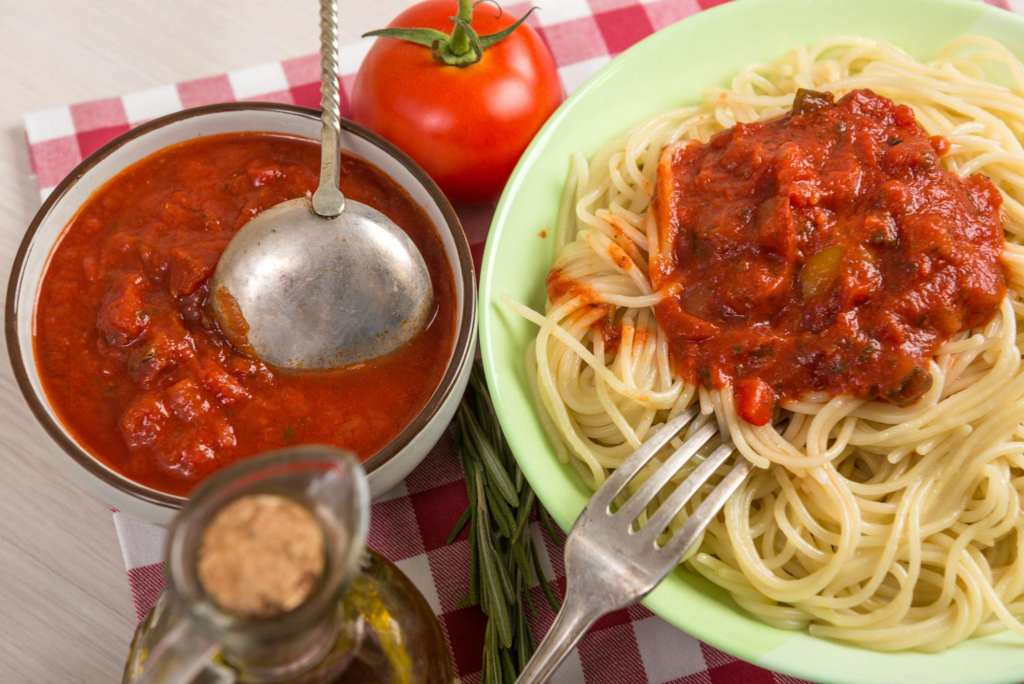
This sauce works well over spaghetti or any pasta shape, and also makes a great base for baked pasta dishes.
Pairings:
- Garlic bread
- A simple green salad
- Grated Parmesan for topping
Storage
Store in an airtight container in the refrigerator for up to 5 days.
Freezing
This sauce freezes very well. Store in freezer-safe containers or bags for up to 4 months. Thaw overnight in the refrigerator before reheating.
Reheating
Reheat on the stovetop over medium-low heat, stirring occasionally, until warmed through. Add a splash of water if the sauce has thickened too much.
Nutrition (Estimated, Per Serving)
Based on 6 servings, sauce only:
- Calories: 220
- Protein: 15g
- Carbohydrates: 12g
- Fat: 13g
- Sodium: 540mg
Frequently Asked Questions
Can I make this without meat? Yes, simply omit the meat or replace it with extra vegetables or plant-based crumbles for a vegetarian version.
How long should I simmer the sauce? At least 45 minutes for good flavor, though simmering for up to 2 hours on low heat develops even more depth.
Can I use fresh tomatoes instead of canned? Yes, though it requires peeling and cooking down fresh tomatoes first, which takes considerably more time than using canned.
Wrapping Up
This is the kind of sauce that makes a simple bowl of spaghetti feel like a real, comforting meal. Give it a try and see how it compares to the jarred version.
If you make it, I’d love to hear how it turned out. Drop a comment below, and feel free to ask if anything about the recipe isn’t clear.