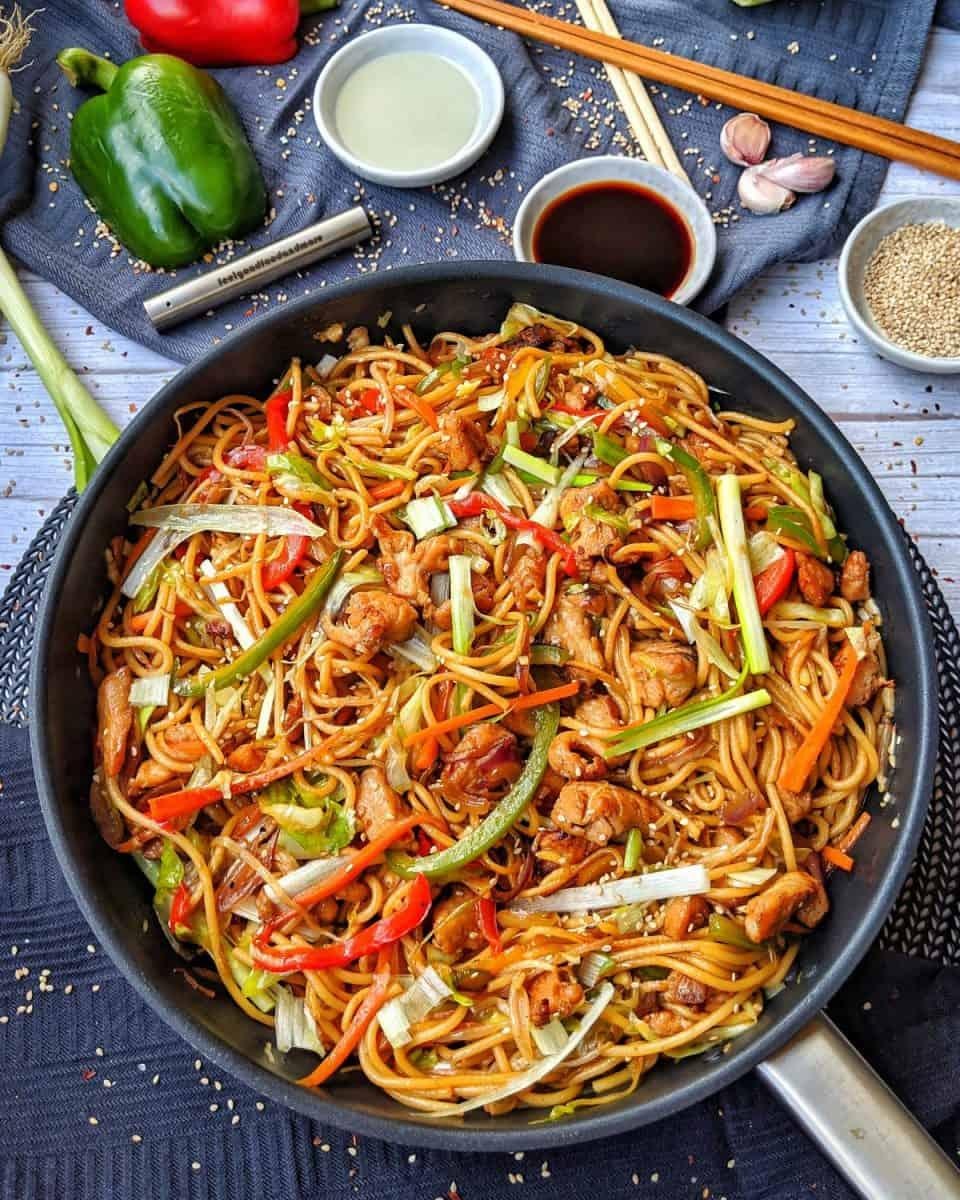
Chow mein and lo mein always confused me until I learned what actually makes them different. 🥢
Chow mein noodles get a little crispy and pan fried, giving them a texture that lo mein just doesn’t have.
This version brings that same slightly crispy, savory flavor right into your own kitchen, and it comes together faster than most takeout orders arrive.
Once you learn the trick to crisping the noodles, this becomes a regular weeknight favorite.
Why This Recipe Works
Boiling the noodles first, then pan frying them until slightly crispy, is what gives chow mein its signature texture.
Cooking the chicken and vegetables in stages keeps everything at its best texture instead of turning mushy together.
And a simple soy sauce based stir fry sauce coats everything without making it soggy.
What You’ll Need
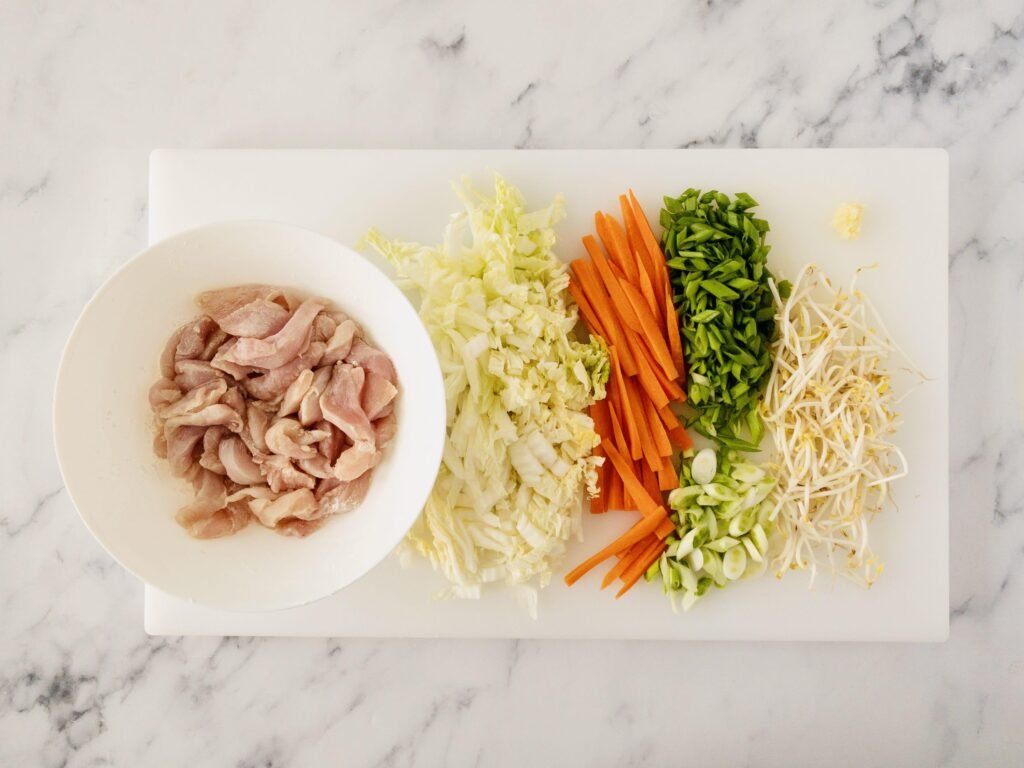
| Ingredient | Amount |
|---|---|
| Chow mein noodles | 8 oz |
| Boneless, skinless chicken breast, sliced thin | 1 lb |
| Vegetable oil | 4 tbsp, divided |
| Garlic, minced | 2 cloves |
| Fresh ginger, minced | 1 tsp |
| Cabbage, shredded | 2 cups |
| Carrots, julienned | 1 cup |
| Bean sprouts | 1 cup |
| Green onions, sliced | 3 |
| Soy sauce | 3 tbsp |
| Oyster sauce | 1 tbsp |
| Sesame oil | 1 tsp |
| Sugar | 1 tsp |
Simple ingredients, but the technique makes this dish what it is.
Tools You’ll Need
- Large wok or deep skillet
- Pot for boiling noodles
- Tongs
- Small bowl for sauce
- Sharp knife and cutting board
Pro Tips
Small things that make a big difference here.
- Boil the noodles slightly under, then let them dry a bit before frying. Extra moisture will steam them instead of letting them crisp.
- Fry the noodles in a single layer when possible. This helps them actually crisp up instead of just steaming in a pile.
- Have everything prepped before you start cooking. This dish moves fast once the pan is hot.
- Use high heat throughout. A hot wok gives you that slightly charred flavor you get from restaurant chow mein.
- Add the sauce at the very end and toss quickly. This keeps the noodles from getting soggy before serving.
Substitutions and Variations
| Original | Swap | Notes |
|---|---|---|
| Chow mein noodles | Thin spaghetti | Works in a pinch, slightly different texture |
| Chicken breast | Shrimp or beef | Adjust cook time accordingly |
| Cabbage | Bok choy | Similar texture, slightly different flavor |
| Oyster sauce | Hoisin sauce | Sweeter flavor profile |
| Soy sauce | Tamari | Good gluten free option |
Want it spicier? Add a spoonful of chili garlic sauce to the sauce mixture.
Make Ahead Tips
You can slice the chicken and prep all the vegetables a day ahead and store them separately in the fridge.
The sauce can be mixed together in advance and kept in a sealed container for up to a week.
This dish is best cooked fresh right before eating, since the crispy noodles soften if they sit too long after cooking.
How to Make Chicken Chow Mein
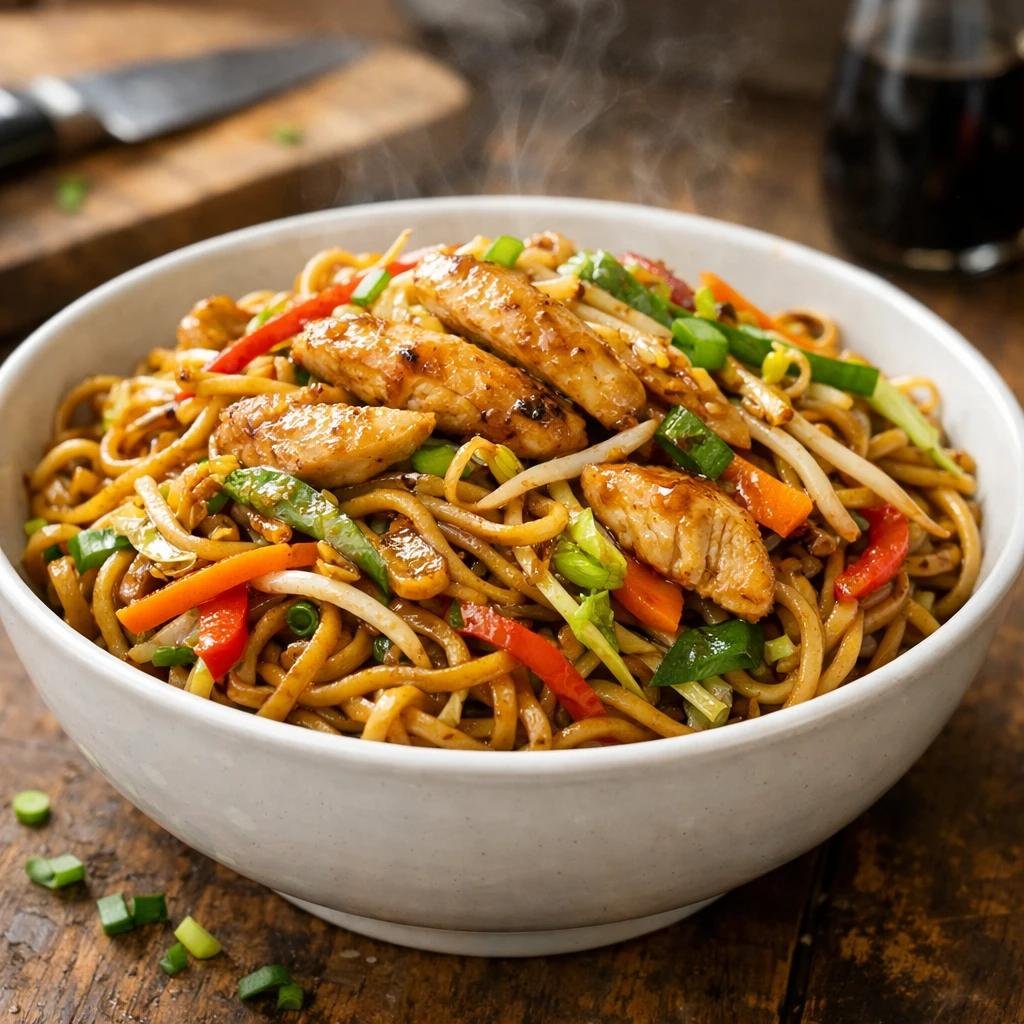
- Cook the chow mein noodles according to package instructions, slightly undercooking them. Drain and let sit for a few minutes to dry out slightly.
- Heat 2 tablespoons of oil in a wok over high heat.
- Add the chicken and cook for 3-4 minutes, until just cooked through. Remove and set aside.
- Add another tablespoon of oil, then add the noodles in a single layer. Fry for 3-4 minutes, flipping occasionally, until slightly crispy in spots. Remove and set aside.
- Add the remaining oil to the pan, then add garlic and ginger, cooking for 30 seconds.
- Add the cabbage and carrots, stir frying for 2-3 minutes.
- Return the chicken and noodles to the pan along with the bean sprouts.
- In a small bowl, mix the soy sauce, oyster sauce, sesame oil, and sugar.
- Pour the sauce over everything and toss quickly to combine.
- Stir in the green onions right before serving.
Serve hot, right out of the wok.
Extra Details
A serving of chicken chow mein comes in around 410 calories, depending on portion size and how much sauce you use.
This works great as a full meal on its own, but also pairs nicely with a side of spring rolls or dumplings.
To make this even faster on a weeknight, prep and chop all your vegetables the night before.
Leftovers and Storage
Store leftovers in an airtight container in the fridge for up to 3 days.
Reheat in a skillet over medium heat, which helps bring back some of that crispy noodle texture, rather than using the microwave.
This dish doesn’t freeze particularly well, since the noodle texture changes significantly after thawing.
FAQ
What’s the difference between chow mein and lo mein? Chow mein noodles are boiled then pan fried until slightly crispy, while lo mein noodles are boiled and simply tossed with sauce without the extra frying step.
Can I use a different noodle if I can’t find chow mein noodles? Yes, thin spaghetti or even rice noodles can work as substitutes, though the texture will vary slightly.
Can I make this vegetarian? Definitely, just skip the chicken and add extra vegetables or tofu instead.
Why aren’t my noodles getting crispy? This usually happens if they’re too wet going into the pan, or if the pan isn’t hot enough. Let them dry slightly after boiling and use high heat.
Can I make this ahead for meal prep? It’s best made fresh, since the noodles lose their crispy texture the longer they sit.
Wrapping Up
Chicken chow mein is proof that a few extra minutes crisping the noodles makes a real difference in the final dish.
Once you get the hang of the boil and fry method, this becomes an easy way to bring that restaurant style texture home.
Give this one a try this week and let me know in the comments what vegetables you added. I always love hearing how people make it their own.