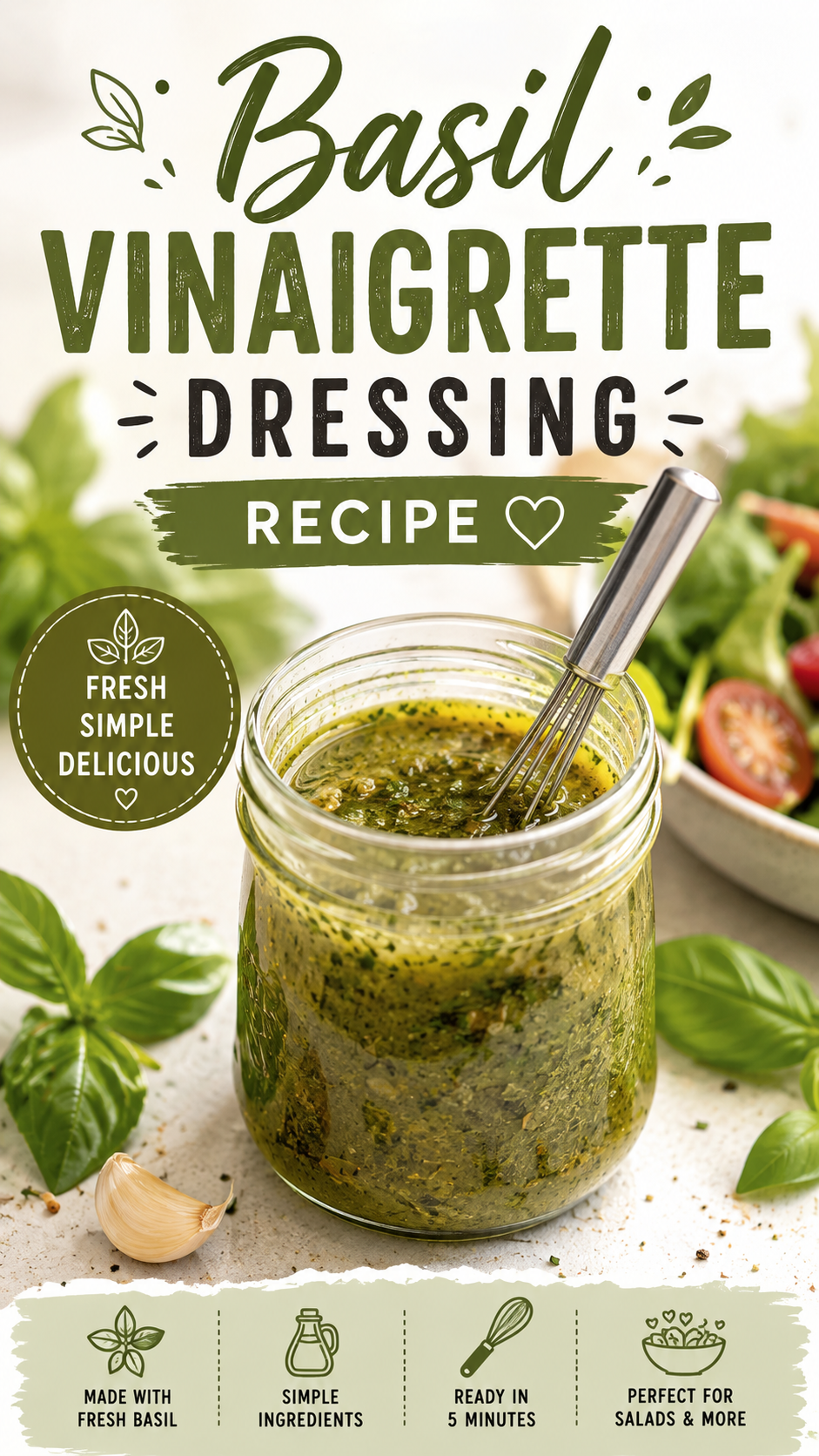
Most bottled dressings taste like a shadow of what fresh herbs can actually do. This one takes about five minutes, uses ingredients you likely already have, and turns a plain bowl of greens into something worth talking about. Bright, garlicky, and loaded with real basil flavor instead of a vague herby aftertaste.
It’s the kind of dressing that makes people ask what’s in it, and the answer is refreshingly simple.
What You’ll Need
For the dressing:
- 1 cup fresh basil leaves, packed
- 1/4 cup extra virgin olive oil
- 2 tablespoons red wine vinegar
- 1 tablespoon lemon juice
- 1 small clove garlic
- 1 teaspoon Dijon mustard
- 1/2 teaspoon honey
- 1/4 teaspoon salt
- 1/8 teaspoon black pepper
- 2 to 3 tablespoons water, to thin as needed
Ingredient Notes
Fresh basil: Fresh is essential here, since dried basil won’t blend into a smooth, vibrant dressing the same way. Look for leaves that are bright green without any dark or wilted spots.
Extra virgin olive oil: A good quality olive oil matters more in a raw dressing than in cooked dishes, since its flavor carries through directly.
Dijon mustard: This helps emulsify the dressing, keeping the oil and vinegar from separating too quickly once blended.
Honey: Just a small amount balances the acidity from the vinegar and lemon without making the dressing taste sweet.
Tools You’ll Need
- Blender or food processor
- Measuring cups and spoons
- Small jar or airtight container for storage
- Spatula
Why This Recipe Works
Blending the basil directly into the dressing, rather than chopping it by hand, breaks down the leaves fully and releases much more of their flavor and aroma into the mixture. This is part of why this dressing tastes so much more vibrant than versions made with just a sprinkle of chopped herbs.
Dijon mustard acts as a natural emulsifier, helping the oil and vinegar bind together into a smoother, more stable dressing that clings to greens instead of pooling at the bottom of the bowl.
A small amount of honey balances the sharpness from the vinegar and lemon juice, which keeps the dressing from tasting overly tangy or one-note.
Pro Tips
- Use fresh basil, not dried. Dried basil lacks the moisture and bright flavor needed for a good blended dressing.
- Add water gradually. Start with 2 tablespoons and add more only if needed, since it’s easy to thin the dressing but harder to thicken it back up.
- Taste before serving. Adjust the salt, honey, or lemon juice depending on your preference and what you’re pairing it with.
- Let it sit for a few minutes before using. This gives the flavors a chance to meld slightly, even in a quick dressing like this one.
- Shake before each use. Even a well-emulsified dressing can separate slightly in the fridge, so a quick shake brings it back together.
Substitutions
| Original Ingredient | Substitute | Flavor Impact |
|---|---|---|
| Red wine vinegar | White wine vinegar | Slightly milder tang |
| Lemon juice | Lime juice | Brighter, slightly more acidic |
| Dijon mustard | Yellow mustard | Milder, less sharp |
| Honey | Maple syrup | Slightly earthier sweetness |
| Extra virgin olive oil | Avocado oil | Milder flavor, similar texture |
| Fresh garlic | Garlic powder (1/4 teaspoon) | Milder, less sharp |
Variations
- Creamy basil dressing: Add 2 tablespoons of mayonnaise or Greek yogurt for a thicker, creamier texture.
- Basil Parmesan dressing: Blend in 2 tablespoons of grated Parmesan for a savory depth.
- Spicy basil dressing: Add a pinch of red pepper flakes for gentle heat.
- Lemon basil dressing: Increase the lemon juice slightly and add a bit of lemon zest for extra brightness.
- Basil balsamic dressing: Swap the red wine vinegar for balsamic vinegar for a deeper, slightly sweeter finish.
Make Ahead Tips
This dressing can be made up to 5 days in advance and stored in the refrigerator in a sealed jar. The flavor holds up well, though it may need a quick shake or stir before each use since it can separate slightly while sitting.
Step by Step Instructions
1. Add the ingredients to a blender. Combine the basil, olive oil, red wine vinegar, lemon juice, garlic, Dijon mustard, honey, salt, and pepper in a blender or food processor.
2. Blend until smooth. Blend on high for 30 to 45 seconds, until the mixture is smooth and bright green.
3. Adjust the consistency. With the blender running, add water 1 tablespoon at a time until the dressing reaches your preferred thickness.
4. Taste and adjust. Taste the dressing and adjust the salt, honey, or lemon juice as needed.
5. Store and serve. Transfer to a jar or airtight container. Serve immediately or refrigerate until ready to use.
Common Mistakes
Mistake: Dressing tastes bitter. This can happen if too much basil stem is included, or if the olive oil used has a strong, bitter flavor on its own. Stick mostly to leaves and use a mild, good quality oil.
Mistake: Dressing separates quickly. A little separation is normal, but a lot usually means the mustard wasn’t blended in fully. Make sure it’s fully incorporated during blending.
Mistake: Dressing is too thick to pour. Add water gradually, one tablespoon at a time, until it reaches a pourable consistency.
Mistake: Basil flavor tastes muted. This often means the basil wasn’t fresh, or too little was used relative to the other ingredients. Fresh, bright green leaves make a noticeable difference.
Serving Suggestions
This dressing works well on more than just green salads.
Pairings:
- Tossed over a simple mixed greens salad
- Drizzled over sliced tomatoes and mozzarella
- Used as a marinade for grilled chicken or shrimp
- Spooned over roasted vegetables
Drinks:
- A crisp Sauvignon Blanc
- Sparkling water with lemon
- Iced green tea
Storage
Store in an airtight jar or container in the refrigerator for up to 5 days. The color may darken slightly over time, which is normal and doesn’t affect the flavor.
Freezing
This dressing isn’t a great candidate for freezing, since the fresh basil and emulsified oil can separate and change texture once thawed. It’s best made fresh or kept refrigerated for short-term use.
Reheating
This dressing is served cold or at room temperature and doesn’t need reheating. If it has thickened or separated in the fridge, simply shake or whisk it back together before use.
Nutrition (Estimated, Per Serving)
Based on 8 servings, about 2 tablespoons each:
- Calories: 60
- Protein: 0g
- Carbohydrates: 1g
- Fat: 6g
- Sodium: 75mg
These numbers are estimates and will vary based on exact ingredients and brands used.
Frequently Asked Questions
Can I make this without a blender? Yes, though you’ll need to finely chop the basil and garlic by hand, then whisk everything together vigorously. The texture will be less smooth than a blended version.
How long does this dressing last in the fridge? Up to 5 days when stored in a sealed container. Give it a shake before each use.
Can I use dried basil instead? Fresh basil is strongly recommended here, since dried basil doesn’t blend into a smooth, vibrant dressing the same way and results in a much weaker flavor.
Is this dressing dairy-free? Yes, as written it’s fully dairy-free. The creamy variation with mayonnaise or yogurt would no longer be dairy-free.
Can I double this recipe? Yes, this recipe scales up easily. Just blend in batches if your blender or food processor has a smaller capacity.
Wrapping Up
This is the kind of dressing that makes plain vegetables feel worth reaching for again. Give it a try next time you want a salad that actually tastes like something.
If you make it, I’d love to hear how it turned out and if you tried any of the variations. Drop a comment below, and feel free to ask if anything about the recipe isn’t clear.