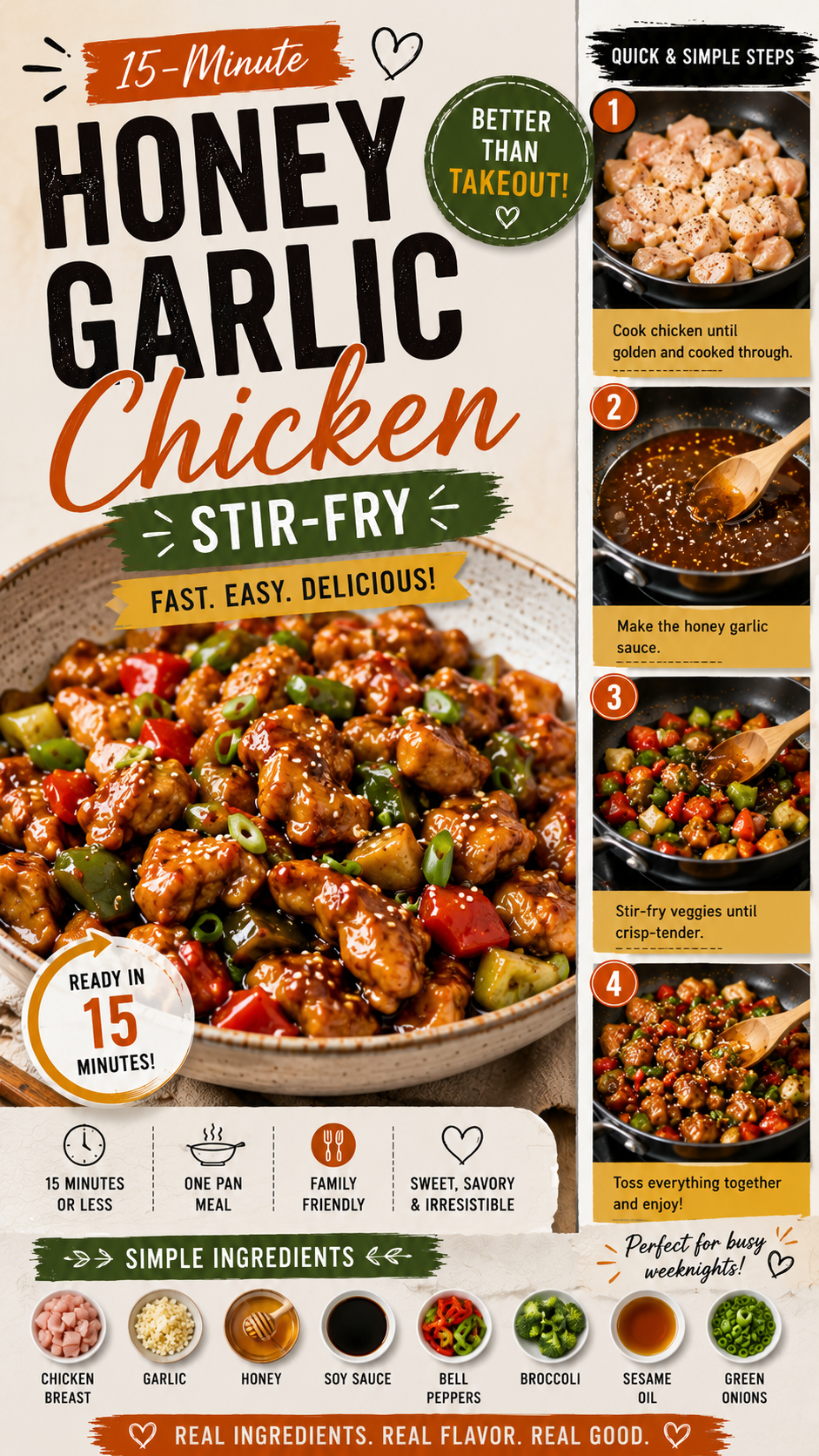
Some nights you get home, open the fridge, and just stand there. You need dinner, and you need it fast, but you also want it to taste like you actually tried. This honey garlic chicken stir-fry solves that problem in one pan and about fifteen minutes of actual cooking time.
It’s sticky, garlicky, a little bit sweet, and loaded with crisp-tender vegetables. No marinating. No obscure ingredients. Just a hot pan, a quick sauce, and dinner on the table before you’d even finish scrolling a delivery app to decide what to order.
What You’ll Need
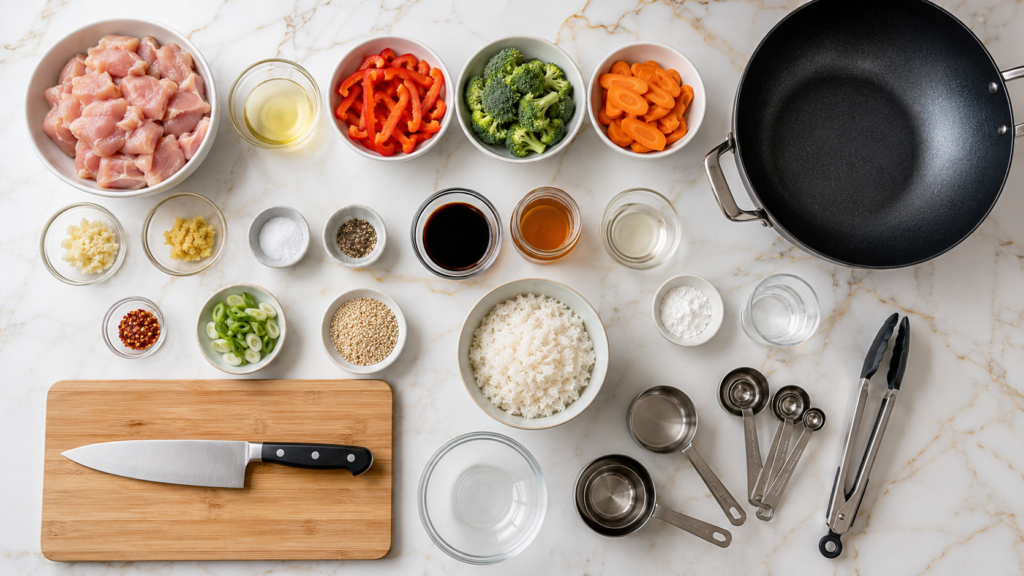
For the chicken and vegetables:
- 1 ½ pounds boneless, skinless chicken breast or thighs, cut into 1-inch pieces
- 2 tablespoons vegetable oil, divided
- 1 red bell pepper, sliced
- 1 cup broccoli florets
- 1 medium carrot, thinly sliced
- 3 cloves garlic, minced
- 1 teaspoon fresh ginger, minced (optional)
- Salt and black pepper, to taste
For the honey garlic sauce:
- 1/3 cup low-sodium soy sauce
- 3 tablespoons honey
- 2 tablespoons rice vinegar
- 1 tablespoon cornstarch
- 1/4 cup water
- 1/2 teaspoon crushed red pepper flakes (optional)
To finish:
- 2 green onions, sliced
- 1 tablespoon sesame seeds (optional)
- Cooked white rice or noodles, for serving
Ingredient Notes
Chicken thighs vs. breast: Thighs stay juicier if you’re worried about overcooking. Breast cooks faster and works fine if you keep the pieces uniform in size.
Soy sauce: Low-sodium is worth seeking out here. Regular soy sauce plus honey can push the dish into overly salty territory.
Honey: Any mild honey works. Avoid strongly flavored varieties like buckwheat, since they can overpower the garlic.
Cornstarch: This is what turns the sauce glossy and clingy instead of thin and watery. Don’t skip it.
Tools You’ll Need
- Large skillet or wok
- Cutting board
- Sharp knife
- Small mixing bowl (for the sauce)
- Measuring cups and spoons
- Tongs or a wooden spoon
Why This Recipe Works
Cutting the chicken into small, even pieces means it cooks through in just a few minutes without drying out. Cooking on high heat sears the outside quickly, which locks in moisture and builds real flavor instead of steaming the chicken gray.
The sauce is built with a cornstarch slurry, a classic stir-fry technique. As it hits the hot pan, the cornstarch thickens almost instantly, coating every piece of chicken and vegetable in a glossy, sticky glaze rather than pooling at the bottom of the pan.
Cooking the vegetables separately from the chicken, then bringing everything back together at the end, keeps the vegetables crisp instead of mushy. That contrast in texture is a big part of what makes stir-fry satisfying to eat.
Pro Tips
- Pat the chicken dry before cooking. Excess moisture on the surface stops it from browning properly and leads to steaming instead of searing.
- Don’t crowd the pan. If your skillet is small, cook the chicken in two batches. Overcrowding drops the pan temperature and the chicken releases water instead of getting a good sear.
- Have everything prepped before you turn on the stove. This recipe moves fast once it starts. Chopping vegetables mid-cook almost always leads to burnt garlic or overcooked chicken.
- Whisk the sauce right before adding it. Cornstarch settles at the bottom of the bowl quickly. A quick whisk right before pouring keeps it evenly distributed.
- Taste and adjust before serving. Depending on your soy sauce brand, you may want an extra splash of vinegar for brightness or a touch more honey for sweetness.
Substitutions
| Original Ingredient | Substitute | Flavor Impact |
|---|---|---|
| Chicken | Firm tofu, shrimp, or thinly sliced beef | Shrimp cooks even faster; tofu needs a firmer press first |
| Soy sauce | Tamari or coconut aminos | Coconut aminos are sweeter and less salty |
| Honey | Maple syrup or brown sugar | Maple syrup adds a slightly earthier note |
| Rice vinegar | Apple cider vinegar | Slightly sharper, less delicate |
| Broccoli | Snap peas or green beans | Both hold their crunch well |
| Bell pepper | Zucchini or snow peas | Milder, less sweetness |
Variations
- Spicy honey garlic: Double the red pepper flakes or stir in a spoonful of chili garlic sauce.
- Pineapple chicken: Add a cup of fresh or canned pineapple chunks during the last two minutes of cooking.
- Sesame orange: Replace two tablespoons of the rice vinegar with fresh orange juice and add orange zest.
- Cashew crunch: Stir in a handful of roasted cashews right before serving for texture.
- Extra vegetable version: Add mushrooms, snap peas, or baby corn along with the other vegetables.
Make Ahead Tips
You can chop the chicken and vegetables up to a day in advance and store them separately in the refrigerator. The sauce can also be mixed ahead of time, minus the cornstarch slurry, and kept in a sealed jar for up to three days. Whisk in the cornstarch right before cooking so it doesn’t settle and clump.
Step by Step Instructions
1. Make the sauce. In a small bowl, whisk together the soy sauce, honey, rice vinegar, cornstarch, water, and red pepper flakes if using. Set aside.
2. Sear the chicken. Heat 1 tablespoon of oil in a large skillet or wok over high heat. Add the chicken in a single layer, season with salt and pepper, and cook for 4 to 5 minutes, stirring occasionally, until browned and cooked through. Remove and set aside.
3. Cook the vegetables. Add the remaining tablespoon of oil to the same pan. Add the bell pepper, broccoli, and carrot. Stir-fry for 3 to 4 minutes, until crisp-tender.
4. Add the aromatics. Push the vegetables to one side of the pan. Add the garlic and ginger to the empty space and cook for 30 seconds, just until fragrant.
5. Combine and add the sauce. Return the chicken to the pan. Give the sauce a quick whisk, then pour it over everything. Stir constantly for 1 to 2 minutes, until the sauce thickens and coats every piece.
6. Finish and serve. Remove from heat. Top with sliced green onions and sesame seeds. Serve immediately over rice or noodles.
Common Mistakes
Mistake: Chicken turns out rubbery. This usually happens from overcooking. Once the chicken hits 165°F internally and the juices run clear, pull it from the heat immediately.
Mistake: Sauce is thin and watery. This means the cornstarch either wasn’t whisked in fully or the sauce didn’t cook long enough after being added. Let it bubble for a full minute or two while stirring.
Mistake: Vegetables turn soggy. High heat and a short cooking time are key. If your stove runs cool, give the pan a few extra minutes to preheat before adding anything.
Mistake: Garlic tastes bitter. Garlic burns fast. Add it only after the vegetables are mostly cooked, and keep it moving in the pan for no more than 30 seconds.
Serving Suggestions
This stir-fry pairs naturally with steamed white or brown rice, but it also works well over rice noodles, soba, or even cauliflower rice for a lower-carb option.
Side dishes:
- Steamed edamame with sea salt
- Simple cucumber salad with rice vinegar
- Egg drop soup
Drinks:
- Iced green tea
- Sparkling water with lime
- A light, off-dry white wine such as Riesling
Dessert:
- Fresh mango slices
- Coconut rice pudding
Storage
Let leftovers cool to room temperature before transferring to an airtight container. Refrigerate for up to 4 days.
Freezing
Stir-fries with a cornstarch-based sauce can change texture slightly after freezing, but it still works in a pinch. Freeze in a freezer-safe container for up to 2 months. Thaw overnight in the refrigerator before reheating.
Reheating
Reheat in a skillet over medium heat with a small splash of water to loosen the sauce, stirring until warmed through. Microwaving works too, in 30-second intervals, stirred between each one to heat evenly.
Nutrition (Estimated, Per Serving)
Based on 4 servings, chicken breast, and not including rice:
- Calories: 320
- Protein: 34g
- Carbohydrates: 22g
- Fat: 10g
- Sodium: 680mg
These numbers are estimates and will vary based on exact ingredients and brands used.
Frequently Asked Questions
Can I use frozen chicken? Thaw it fully first. Cooking from frozen releases extra water into the pan and prevents a good sear.
Is this recipe gluten-free? Use tamari instead of regular soy sauce and confirm your other ingredients are certified gluten-free.
Can I make it less sweet? Cut the honey down to 2 tablespoons and add an extra teaspoon of soy sauce to balance it.
What if I don’t have a wok? A large, deep skillet works just as well. The main goal is a wide, hot surface so the food sears instead of steams.
Can kids eat this? Yes. Leave out the red pepper flakes and it becomes a mild, kid-friendly dinner.
Wrapping Up
This one comes together fast enough for a busy Tuesday and tastes good enough to make again on purpose. Give it a try this week and see how it fits into your dinner rotation.
If you make it, I’d love to hear how it turned out and if you tried any of the variations. Drop a comment below, and feel free to ask if anything about the recipe isn’t clear.