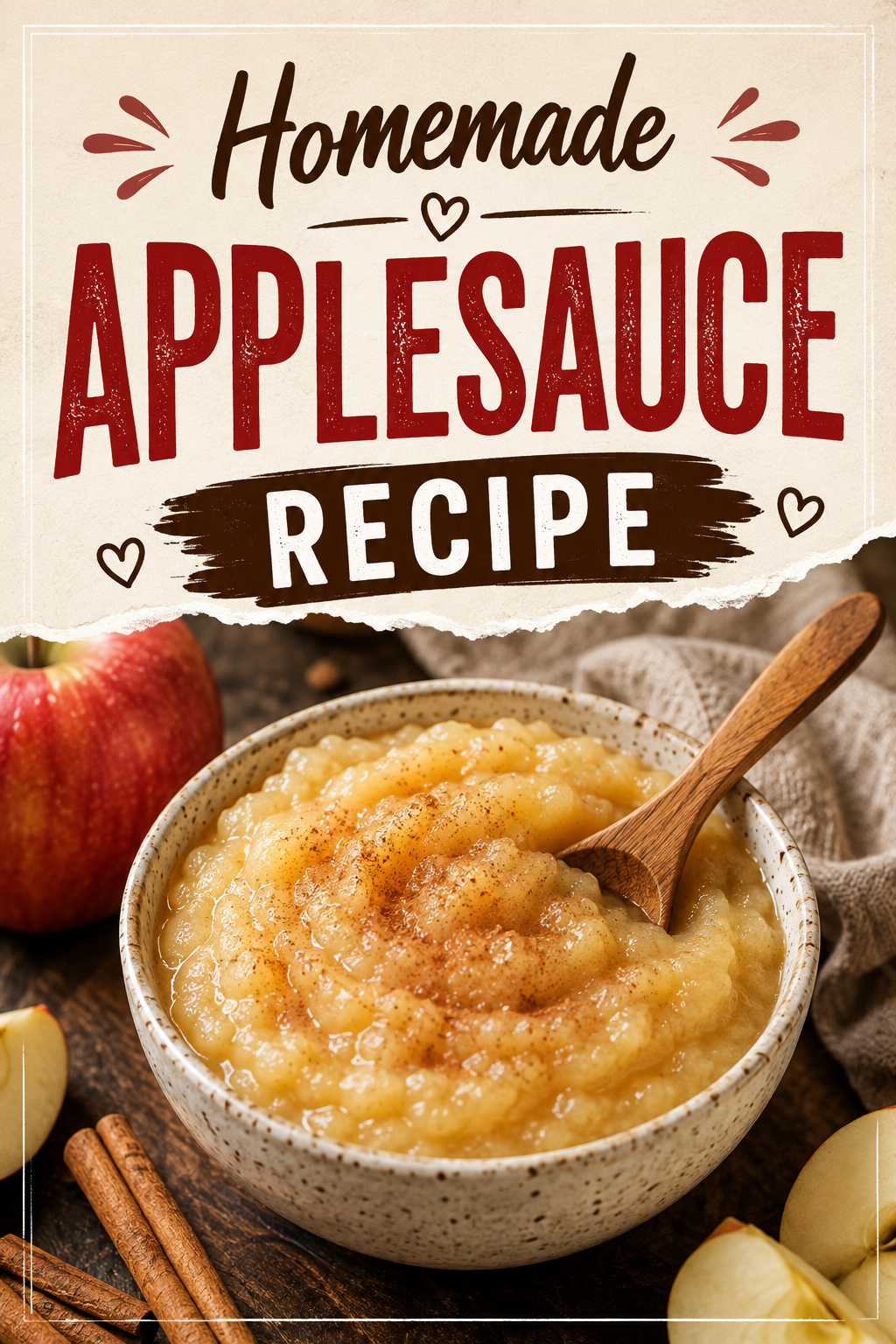
Store-bought applesauce usually tastes like sugar with a vague apple aftertaste. Homemade is a different thing entirely. A handful of apples, a little cinnamon, and about thirty minutes on the stove turn into something warm, chunky or smooth depending on your mood, and genuinely tasting like fruit.
It’s one of those recipes that seems almost too simple to bother writing down, yet most people have never actually made it from scratch. Once you do, the jarred version starts to feel unnecessary.
What You’ll Need
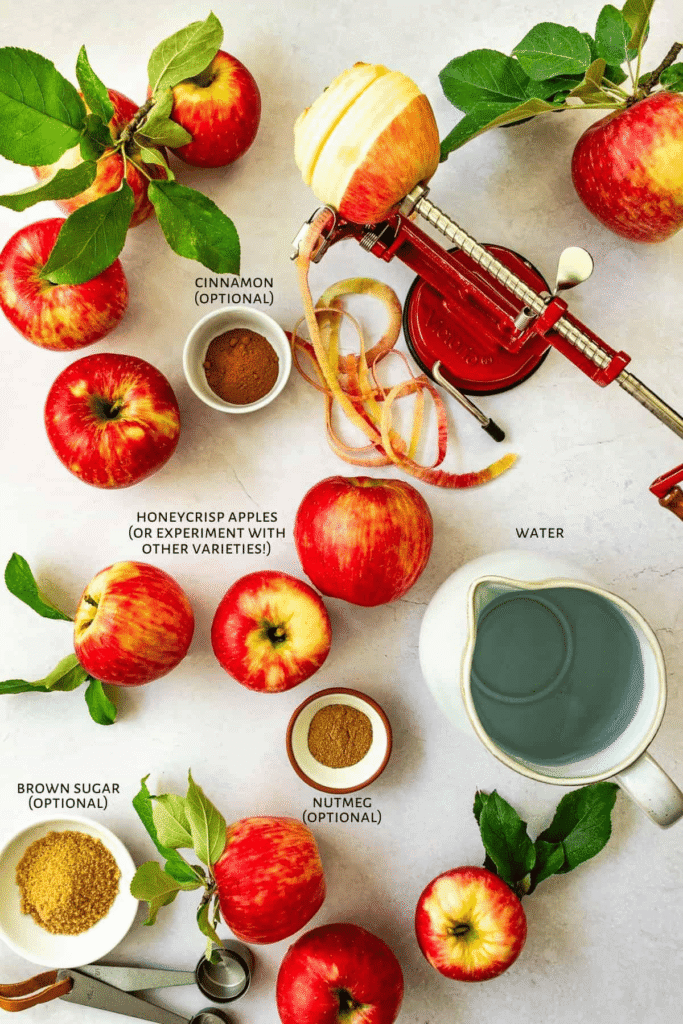
- 6 medium apples (a mix of sweet and tart works best)
- 1/2 cup water
- 2 tablespoons lemon juice
- 2 tablespoons brown sugar (optional, adjust to taste)
- 1/2 teaspoon ground cinnamon
- Pinch of salt
Ingredient Notes
Apple variety: A mix of sweet apples like Honeycrisp or Fuji with a tart variety like Granny Smith gives the best balance. Using only one kind can make the sauce taste flat or overly sweet.
Lemon juice: This keeps the apples from browning as they cook and adds a light brightness that balances the natural sweetness.
Brown sugar: This is optional and depends heavily on how sweet your apples already are. Taste before adding and adjust from there.
Tools You’ll Need
- Large pot with lid
- Apple peeler or paring knife
- Cutting board
- Wooden spoon
- Immersion blender or potato masher (for smooth or chunky texture)
Why This Recipe Works
Cooking the apples covered traps steam, which softens them faster and more evenly than cooking uncovered. This is what turns firm apple chunks into a tender, saucy texture without needing extra liquid.
Using a mix of apple varieties balances sweetness and tartness naturally, so you need far less added sugar than most store-bought versions rely on.
Mashing or blending at the end, rather than during cooking, gives you control over the final texture, whether you prefer it smooth or with some texture left in.
Pro Tips
- Cut apples into even pieces. This helps them cook at the same rate, so you don’t end up with some pieces mushy and others still firm.
- Taste before adding sugar. Ripe, in-season apples often need little to no added sugar at all.
- Don’t skip the lemon juice. Beyond preventing browning, it adds a subtle tang that keeps the sauce from tasting one-dimensional.
- Cook covered, then uncover to thicken. Cooking uncovered for the last few minutes lets excess liquid evaporate if the sauce seems too thin.
- Let it cool before adjusting sweetness. Flavors taste slightly different once cooled, so a final taste test after cooling helps you dial it in.
Substitutions
| Original Ingredient | Substitute | Flavor Impact |
|---|---|---|
| Brown sugar | Honey or maple syrup | Slightly different, more complex sweetness |
| Cinnamon | Apple pie spice | Warmer, more layered flavor |
| Lemon juice | Apple cider vinegar (small amount) | Slightly sharper tang |
| Water | Apple cider | Deeper, more concentrated apple flavor |
Variations
- Cinnamon spice applesauce: Add a pinch of nutmeg and ground cloves along with the cinnamon.
- Chunky applesauce: Mash lightly with a fork or potato masher instead of blending smooth.
- Slow cooker applesauce: Cook on low for 4 hours instead of on the stovetop.
- Berry applesauce: Add a handful of fresh or frozen berries during the last 10 minutes of cooking.
- Unsweetened applesauce: Skip the brown sugar entirely and rely on naturally sweet apples.
Make Ahead Tips
Applesauce keeps well in the refrigerator for up to a week, which makes it easy to prepare a batch ahead of time for snacking or cooking throughout the week.
Step by Step Instructions
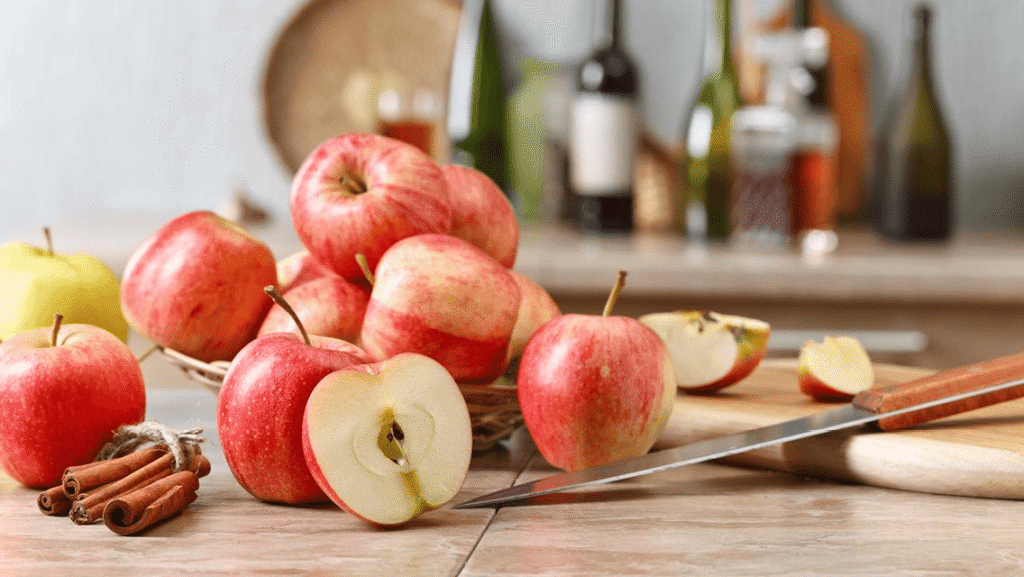
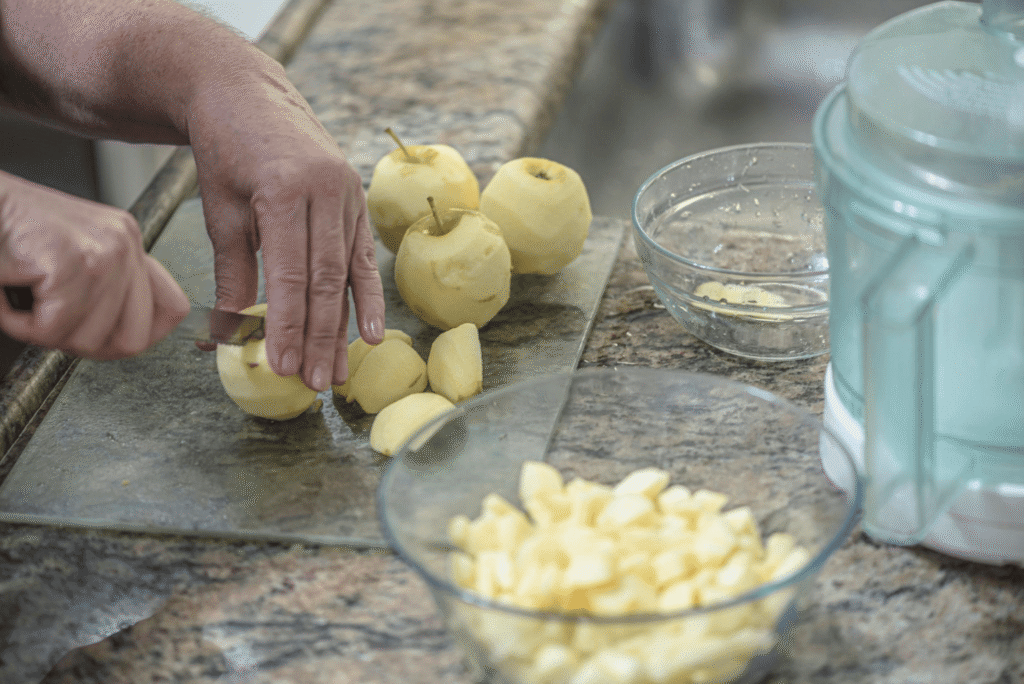
1. Prep the apples. Peel, core, and chop the apples into roughly 1-inch pieces.
2. Combine in the pot. Add the apples, water, and lemon juice to a large pot.
3. Cook covered. Cover and cook over medium heat for 15 to 20 minutes, stirring occasionally, until the apples are very soft.
4. Add seasoning. Stir in the cinnamon, salt, and brown sugar if using.
5. Mash or blend. For a chunky texture, mash with a potato masher. For smooth applesauce, use an immersion blender.
6. Adjust and cool. Taste and adjust sweetness as needed. Let cool before serving or storing.
Common Mistakes
Mistake: Applesauce tastes bland. This usually means the apples weren’t very flavorful to begin with, or not enough cinnamon or lemon juice was used. Adjust seasoning gradually and taste as you go.
Mistake: Sauce is too watery. Cooking uncovered for the last few minutes helps extra liquid evaporate and thickens the sauce.
Mistake: Uneven texture. Uneven apple pieces cook unevenly. Try to keep chunks a similar size for the best results.
Serving Suggestions
Applesauce works well on its own as a snack, alongside pork chops or roasted meats, or spooned over oatmeal and pancakes.
Pairings:
- Roasted pork tenderloin
- Warm oatmeal
- Vanilla yogurt
Storage
Store in an airtight container in the refrigerator for up to 7 days.
Freezing
Applesauce freezes very well. Store in freezer-safe containers, leaving room for expansion, for up to 6 months. Thaw in the refrigerator before serving.
Reheating
Applesauce can be enjoyed cold, at room temperature, or gently warmed on the stovetop or in the microwave.
Nutrition (Estimated, Per Serving)
Based on 6 servings:
- Calories: 90
- Protein: 0g
- Carbohydrates: 24g
- Fat: 0g
- Sodium: 15mg
Frequently Asked Questions
Do I need to peel the apples? Peeling gives a smoother texture, though leaving the skins on and blending well works too and adds extra fiber.
Can I make this without added sugar? Yes, especially with naturally sweet apple varieties. Taste as you cook and add sugar only if needed.
How long does homemade applesauce last? Up to a week in the refrigerator, or up to 6 months in the freezer.
Wrapping Up
Once you taste homemade applesauce next to the jarred version, it’s hard to go back. Give it a try this week with whatever apples you have on hand.
If you make it, I’d love to hear how it turned out. Drop a comment below, and feel free to ask if anything about the recipe isn’t clear.