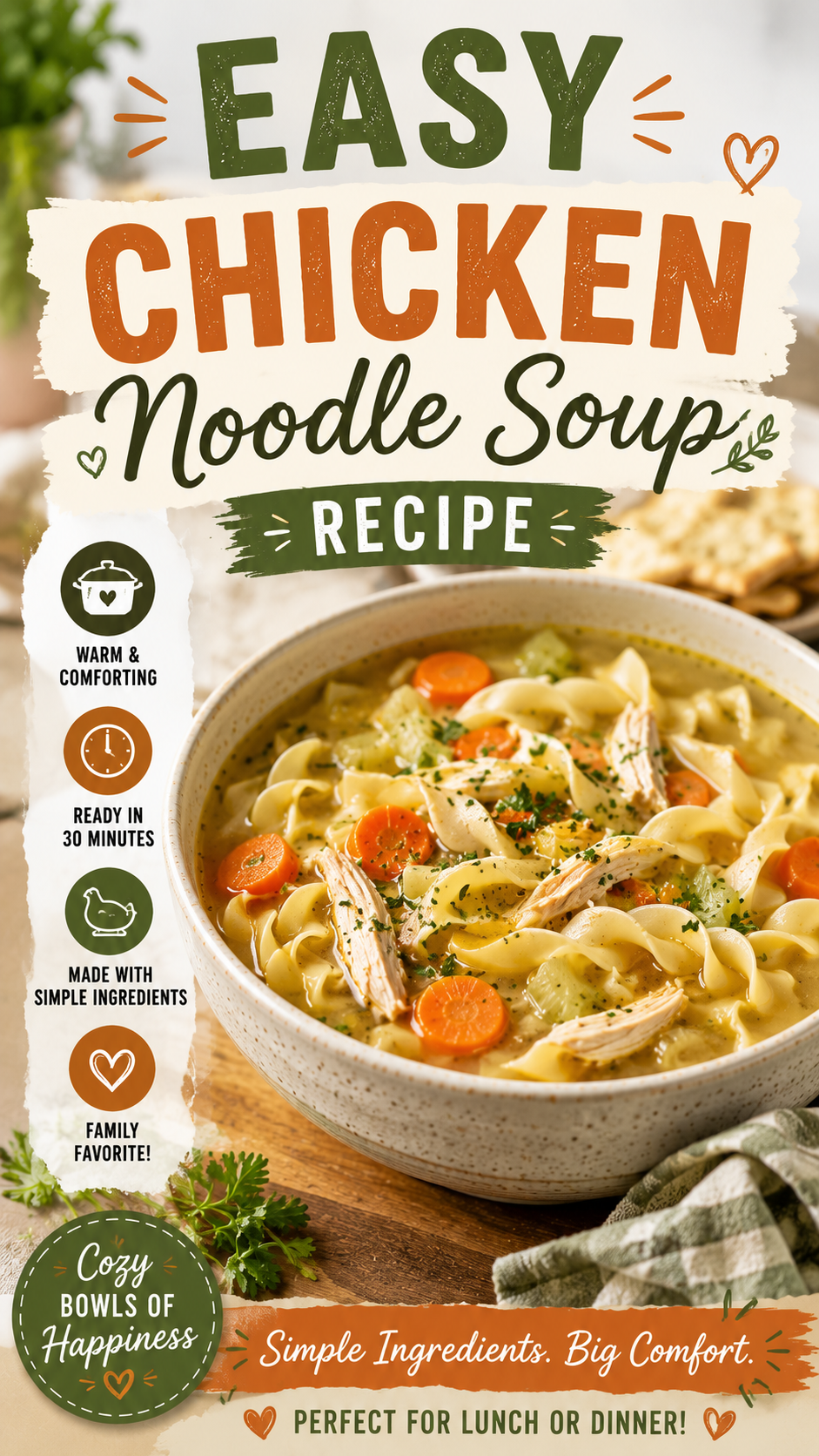
Canned chicken noodle soup has its place, but it will never taste like this.
This version comes together in about 40 minutes, with real vegetables, real chicken, and a broth that actually tastes like something instead of just salt water with noodles floating in it.
It’s the soup I make when someone in my house is sick, or when I just want something warm and simple for dinner.
Why This Recipe Works
Starting with bone-in chicken thighs instead of pre-cooked, shredded chicken means the broth actually builds flavor as everything simmers together.
Sautéing the vegetables in a little butter before adding liquid gives them a head start on flavor, instead of just boiling everything together from the start. 🥕
Adding the noodles toward the end keeps them from turning mushy and soaking up too much of the broth before you’re even ready to eat.
What You’ll Need
| Ingredient | Amount |
|---|---|
| Bone-in, skin-on chicken thighs | 1.5 lbs |
| Unsalted butter | 2 tbsp |
| Yellow onion, diced | 1 medium |
| Carrots, sliced | 3 medium |
| Celery stalks, sliced | 3 |
| Garlic, minced | 3 cloves |
| Chicken broth | 8 cups |
| Bay leaves | 2 |
| Dried thyme | 1 tsp |
| Salt | 1 tsp, plus more to taste |
| Black pepper | 1/2 tsp |
| Egg noodles | 2 cups |
| Fresh parsley, chopped | for topping |
Bone-in thighs add more flavor to the broth than boneless breasts, though either works if that’s what you have on hand.
Tools You’ll Need
- Large pot or Dutch oven
- Tongs
- Cutting board and knife
- Two forks (for shredding)
- Ladle
Pro Tips
1. Use bone-in chicken for a richer broth. The bones release flavor and a little natural gelatin as they simmer, giving you a deeper tasting soup than boneless chicken alone.
2. Skim any foam off the top as it simmers. This keeps the broth clear instead of cloudy, especially in the first 10 minutes of cooking.
3. Remove the chicken before it’s fully falling apart. Pulling it out while it’s still holding together makes shredding much easier than trying to fish out tiny pieces later.
4. Add the noodles during the last 10 minutes only. Adding them too early leaves you with soft, overcooked noodles by the time you’re ready to serve.
5. Season at the end, not just the beginning. Broth reduces and concentrates as it simmers, so a final taste and adjustment makes a real difference.
Substitutions and Variations
- Boneless chicken: Boneless, skinless thighs or breasts work too, just expect a slightly lighter broth flavor.
- Gluten-free: Use a gluten-free egg noodle or rice in place of regular noodles.
- Extra vegetables: Add sliced mushrooms or a handful of chopped spinach during the last few minutes.
- Rice instead of noodles: Swap in cooked rice for a heartier, slightly different take on the classic.
- Lemon brightness: Stir in a squeeze of fresh lemon juice right before serving for a little acidity.
- Slow cooker version: Combine everything except the noodles in a slow cooker on low for 6 hours, then shred the chicken and add the noodles for the last 20 to 30 minutes.
Make Ahead Tips
The broth base, with the chicken and vegetables, can be made up to 3 days ahead and stored in the fridge, or frozen for up to 3 months.
I’d recommend adding the noodles fresh each time you serve it, since they soften considerably the longer they sit in the broth.
How to Make It
- Melt the butter in a large pot over medium heat. Add the onion, carrots, and celery. Cook for 5 minutes, until slightly softened.
- Add the garlic and cook for 30 seconds, until fragrant.
- Add the chicken thighs, chicken broth, bay leaves, thyme, salt, and pepper.
- Bring to a boil, then reduce to a simmer. Skim any foam from the surface.
- Simmer for 25 to 30 minutes, until the chicken is fully cooked and tender.
- Remove the chicken and let it cool slightly, then shred it with two forks, discarding the skin and bones.
- Return the shredded chicken to the pot.
- Add the egg noodles and simmer for an additional 8 to 10 minutes, until tender.
- Remove the bay leaves. Taste and adjust seasoning as needed.
- Ladle into bowls and top with fresh parsley before serving.
Nutrition and Diet Notes
Here’s roughly what you’re working with per serving (recipe serves 6):
- Calories: about 240
- Protein: about 20g
- Carbohydrates: about 18g
For a lighter version, use boneless, skinless chicken breast and reduce the butter slightly, though the broth will be a bit less rich.
What to Serve It With
- Warm, crusty bread or dinner rolls
- A simple side salad if you’re serving it as a full dinner
- Saltine crackers for that classic, nostalgic pairing
Leftovers and Storage
Store leftovers in an airtight container in the fridge for up to 4 days.
The noodles will keep absorbing broth as they sit, so the soup thickens quite a bit overnight. Add a splash of broth or water when reheating to loosen it back up.
To freeze, store the broth and chicken without the noodles. Freeze for up to 3 months, then cook fresh noodles directly in the broth when you’re ready to serve.
FAQ
Can I use rotisserie chicken instead of raw chicken thighs?
Yes, though the broth won’t be quite as rich since it won’t have simmered with the bones. Add the shredded rotisserie chicken toward the end instead.
Why is my broth cloudy?
This usually happens if the foam wasn’t skimmed off during the first several minutes of simmering, or if the broth boiled too vigorously instead of gently simmering.
Can I make this soup ahead for meal prep?
Yes, the broth and chicken hold up well for a few days. Just cook fresh noodles each time you reheat a portion for the best texture.
Can I use a different pasta shape?
Yes, small shapes like ditalini or even broken spaghetti work well in place of traditional egg noodles.
Is this recipe good for when someone is sick?
Yes, this is exactly the kind of simple, warm, easy-to-digest soup that’s genuinely comforting when you’re not feeling well.
Wrapping Up
This soup has earned its spot as the thing I make anytime someone in my house needs a little comfort, sick or not.
It’s simple, warm, and the kind of meal that just feels like being taken care of.
If you make this, come back and tell me if you added rice instead of noodles, or if you kept it classic. 🍜
I’d love to hear how yours turned out.